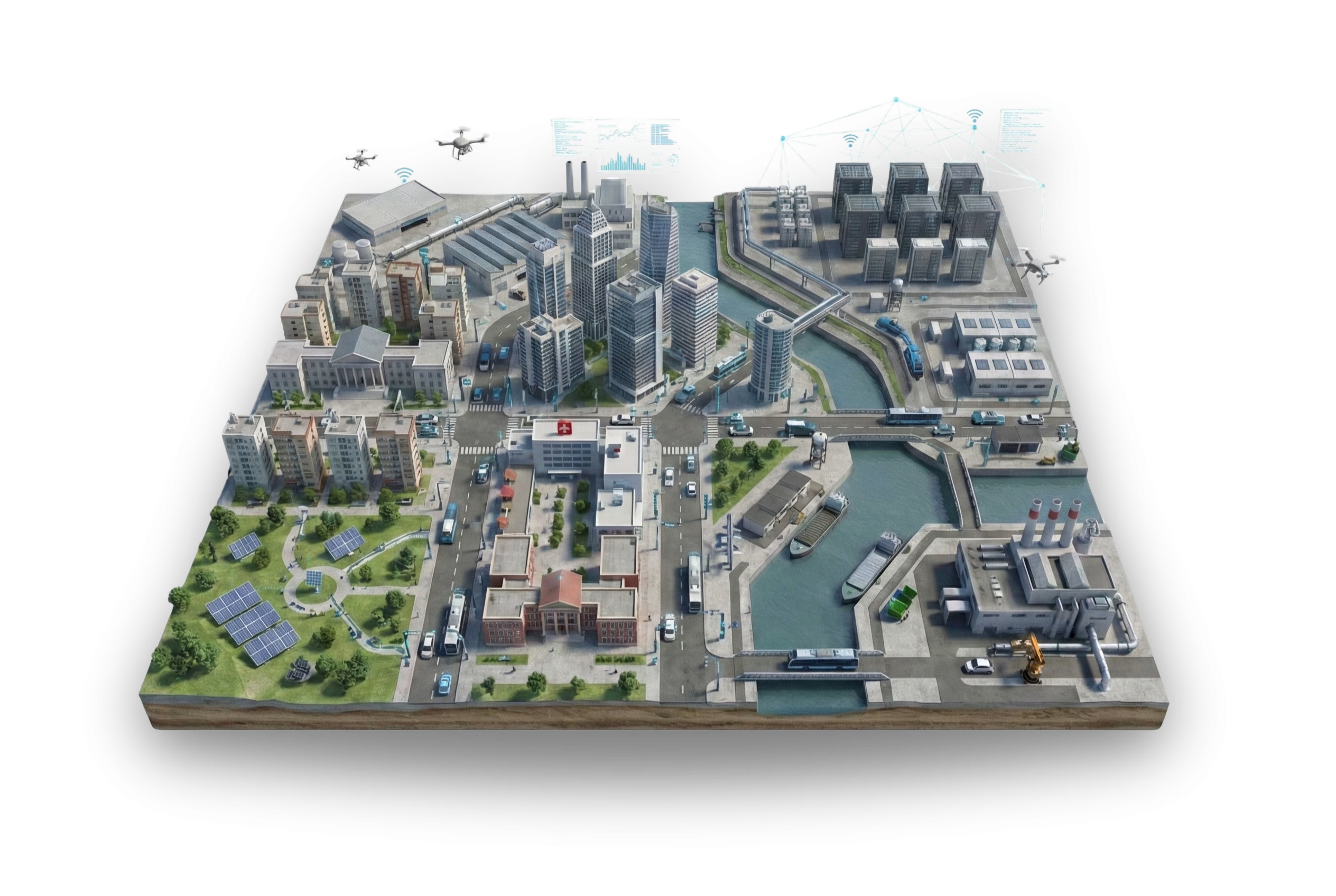



Smart city IoT solutions: what to connect first and how to run it
A smart city IoT solution connects the street lights, meters, bins and sensors a city already pays to maintain, and puts them in one platform that every department can use. The value comes from acting on that data: fixing a dark street before anyone calls, finding a leak at night and sending the waste truck only where it is needed.
Urban services that pay off first
- Street lighting: Each luminaire reports whether it is on, what it consumes and when it fails, so crews go to the right pole. See smart street lighting.
- Water networks: Remote meter reading and night-flow alerts that point to leaks. We explain the options in smart water metering.
- Waste collection: Fill-level sensors in bins and containers, so routes follow real demand. See waste management.
- Air quality and noise: Street and school monitors with public dashboards that citizens can open from a link.
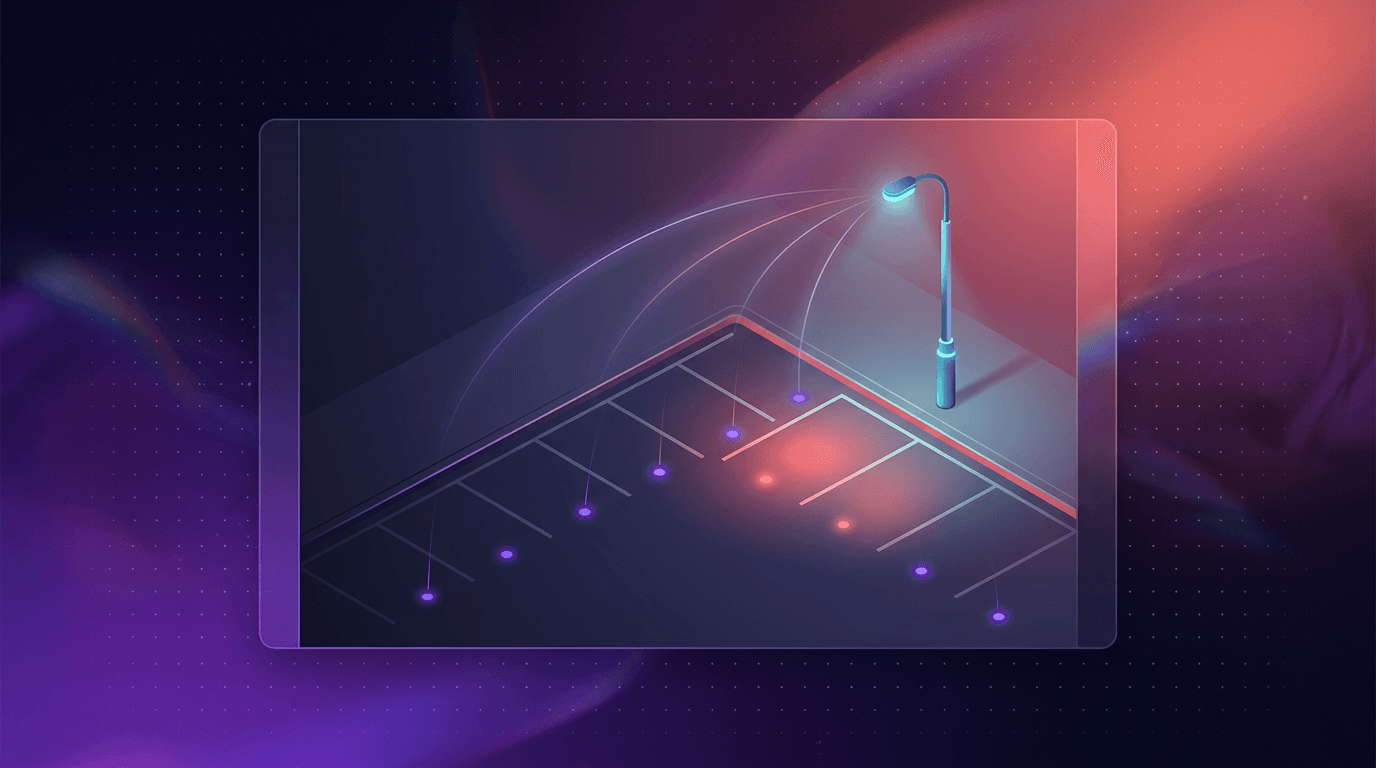
- Parking and mobility: Parking bay sensors and traffic counters. See intelligent transportation.
- Public buildings: Energy, comfort and leaks in schools, sports centres and offices. See smart building.
Our library of LoRaWAN devices lists parking, level, water and air quality sensors with their decoders ready for the platform.
Connectivity across a city: LoRaWAN, cellular and the systems you already have
No single network covers every use. Most cities combine a long-range network for battery sensors, cellular for devices that need more data, and the control systems that already run water or lighting.
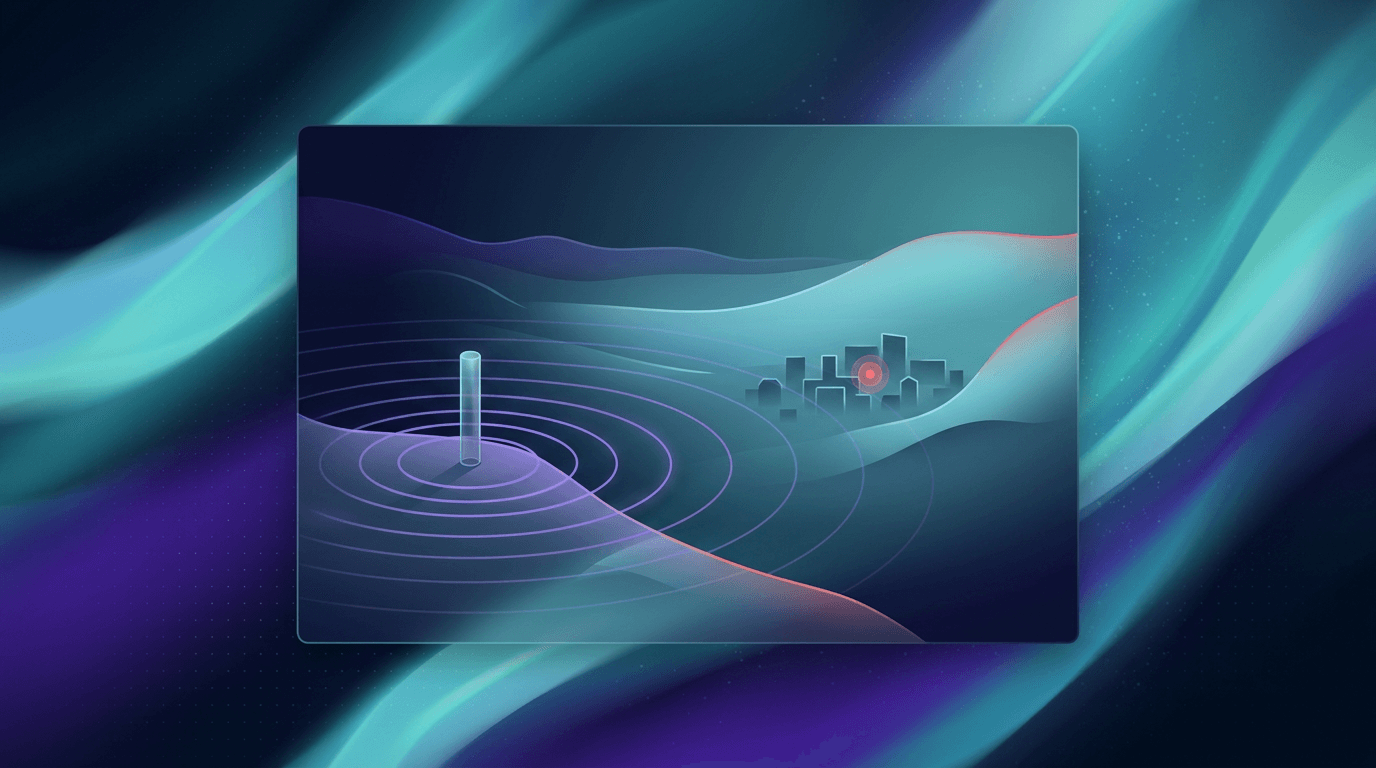
- LoRaWAN: Kilometres of range and batteries that last years. The platform connects to the network server you choose, such as The Things Stack, LORIOT, ThingPark or ChirpStack. More in LoRaWAN for smart cities and on our LoRaWAN platform.
- 4G and other cellular: Devices with a SIM send their data straight to the platform over MQTT or HTTPS, with no gateway to install.
- SCADA, Modbus and OPC UA: Pumping stations and control cabinets are read through a software gateway at the edge, so nothing in the field has to be replaced.
One platform for every department and contractor
Lighting, water and waste are often run by different teams or by private contractors, each with its own tool. A smart city platform puts them on the same base without mixing their data.
- A portal for each department or contractor: Each one has its own users and permissions and sees only its own service, while the city sees all of them.
- Alerts where the crews are: Email, SMS, WhatsApp, voice call and push on the mobile app for iOS and Android.
- Public dashboards: Share air quality or service status with citizens through a link, without giving them an account.
- Under your brand: For integrators and utilities that sell smart city services to several municipalities. See the white-label IoT platform.
- Cloud or the city's own servers: AWS Frankfurt for Europe and AWS in the United States for the rest of the world, or on-premise on Windows Server and SQL Server when the data has to stay in the city's data centre.
Public projects already running on Cloud Studio IoT
- Street lighting in Buenos Aires: With our partner Smartmation, the platform manages and monitors about 150,000 of the city's luminaires, more than 100,000 devices in a single deployment. Read the story.
- Air quality in 120 schools in the Canary Islands: For Gesplan and the Government of the Canary Islands, 240 solar-powered 4G monitors were installed across the seven islands in 18 working days against the 79 planned, and every school has a dashboard with a public link. Read the case.
How a smart city project starts
- 1. Pick one service: Start where the cost is clear: lighting failures, water losses or half-empty waste routes.
- 2. Run a pilot in one district: A few gateways and a few dozen sensors are enough to see real data within weeks.
- 3. Connect what already exists: Bring in the control systems and meters the city already has, and set up the alerts for each team.
- 4. Extend to the whole city: Reuse the same dashboards and rules for each new district and each new service.
You can start with a free trial and move to a dedicated instance or your own servers without rebuilding anything. See the plans or tell us about your city.