

Skip to main content

The Future of Work with Workspace 4.0

Create smarter, more productive workspaces with IoT-powered space management and employee experience solutions.

The Future of Work with
30%

Improvement in space utilization

45%

Increase in employee satisfaction

25%

Reduction in real estate costs

35%

Energy savings in facilities

40%

Time saved finding workspaces

50%

Improvement in workplace safety

Not optional

What the law and the lenders already ask of this kind of installation.

  • Required by lawRoyal Decree 486/1997 on workplacesIn force for every workplace.
  • Required by lawRITE (Royal Decree 1027/2007), indoor air qualityIn force for every installation designed under the RITE.
  • Required by lawDirective (EU) 2024/1275 (EPBD), indoor environmental qualityNew buildings must be zero-emission from 2028 (public owners) and 2030 (all). Renovations: once the directive is transposed (deadline 29 May 2026).
  • Required by lawRITE (Royal Decree 1027/2007), temperature limits and displayIn force.
What each rule requires
01
Better space utilization
40%

Better space utilization

02
Employee satisfaction increase
50%

Employee satisfaction increase

03
Real estate cost reduction
30%

Real estate cost reduction

Smart Offices
01

Smart Offices

Forward-thinking companies create hybrid workplaces that adapt to how people work.

Hybrid Meeting Rooms
02

Hybrid Meeting Rooms

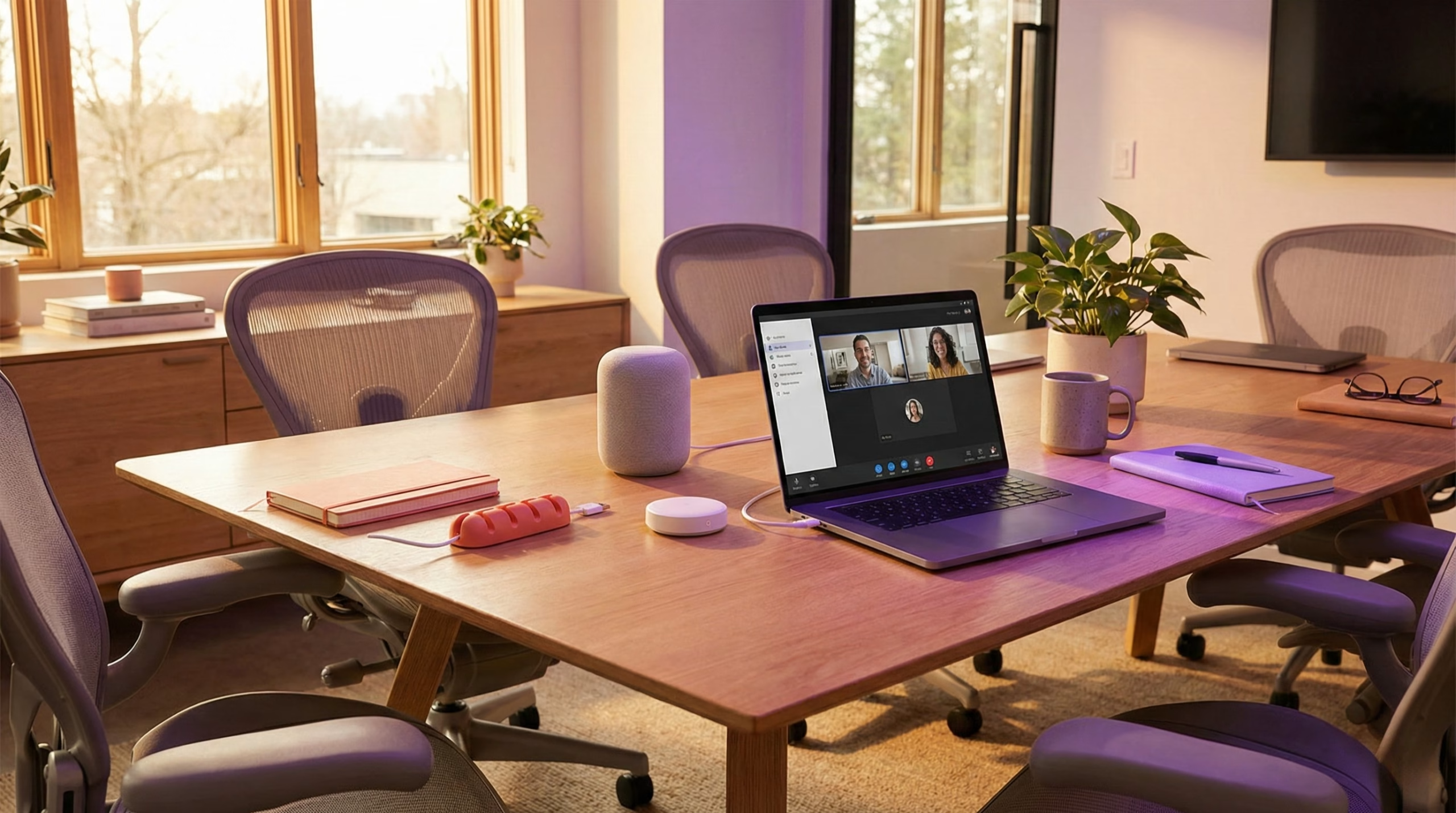
Meeting rooms equipped with IoT sensors automatically adjust for optimal hybrid meetings.

Complete Workspace 4.0 Solutions

Create hybrid workplaces that support productivity, collaboration, and well-being.

Space Management

Real-time occupancy tracking for desks and rooms.

Environmental Control

Smart HVAC and lighting based on occupancy and preferences.

Occupancy Analytics

Data-driven insights for space optimization.

Air Quality Monitoring

Ensure healthy indoor environments for employees.

Regulations and certifications

What is required by law, what lenders and insurers ask for, and what is optional, with how continuous monitoring helps document it. The platform supports compliance; it does not certify it.

Required by law

Rules in force for the buildings and operators in their scope. Not meeting them can bring inspections, fines or loss of a licence.

  • Required by lawSpainLaw

    Royal Decree 486/1997 on workplaces

    Annex III, environmental conditions

    What it requires: Offices and similar sedentary work must stay between 17 and 27 °C (14 to 25 °C for light work), with relative humidity between 30% and 70% and at least 30 m³ of fresh air per hour per worker (50 m³ in other cases). It sets no CO2 limit.

    Applies: In force for every workplace.

    If it is not met: It is an occupational health and safety rule, enforced by the labour inspectorate; the decree itself sets no fine amounts.

    How monitoring helps: Temperature, humidity and CO2 per room, logged continuously, show whether each workspace stays within the ranges and give the prevention service a record when an employee complains.

    Official source
  • Required by lawSpainLaw

    RITE (Royal Decree 1027/2007), indoor air quality

    IT 1.1.4.2.2 and 1.1.4.2.3

    What it requires: Non-residential buildings must reach the indoor air category for their use: IDA 2 for offices and classrooms (12.5 litres of outdoor air per second per person), IDA 1 for nurseries and hospitals, IDA 3 for shops, restaurants and gyms. The CO2 method (500 ppm above outdoor air for IDA 2) is reserved for premises with high physical activity or high pollutant production.

    Applies: In force for every installation designed under the RITE.

    If it is not met: RITE breaches are sanctioned under the Industry Act (Ley 21/1992), enforced by the regions. Not having a mandatory maintenance contract or running installations that have not passed inspection are serious infractions, with fines of up to 6 million euros; minor ones go up to 60,000 euros.

    How monitoring helps: CO2 measured per room shows whether the ventilation designed on paper is delivered in use, room by room and hour by hour, with an alert when a space runs short of fresh air.

    Official source
  • Required by lawSpainLaw

    RITE (Royal Decree 1027/2007), temperature limits and display

    IT 3.8.2 and IT 3.8.3

    What it requires: In administrative, commercial and public-assembly premises, heating may not be set above 21 °C nor cooling below 26 °C, with relative humidity between 30% and 70%. Premises over 1,000 m² must show temperature and humidity on a visible display.

    Applies: In force.

    If it is not met: RITE breaches are sanctioned under the Industry Act (Ley 21/1992), enforced by the regions. Not having a mandatory maintenance contract or running installations that have not passed inspection are serious infractions, with fines of up to 6 million euros; minor ones go up to 60,000 euros.

    How monitoring helps: Temperature and humidity sensors per zone log the values every few minutes, so the building can prove it stayed within limits and see where it did not.

    Official source
  • Required by lawEuropean UnionLaw

    Directive (EU) 2024/1275 (EPBD), indoor environmental quality

    Article 13(4) and (5)

    What it requires: Member States must set indoor environmental quality standards. New non-residential zero-emission buildings must have devices that measure and regulate indoor air quality, and existing non-residential buildings must add them at a major renovation where technically and economically feasible.

    Applies: New buildings must be zero-emission from 2028 (public owners) and 2030 (all). Renovations: once the directive is transposed (deadline 29 May 2026).

    If it is not met: National penalties under Article 34. There is no school-specific rule in the directive.

    How monitoring helps: CO2, temperature and humidity sensors per room report to one platform that stores the readings, shows them per space and raises an alert when a room goes out of range, so the measurement exists and can be shown.

    Official source
  • Required by lawUnited StatesLaw

    OSH Act General Duty Clause and indoor air quality

    Section 5(a)(1)

    What it requires: OSHA has no indoor air quality standard (it withdrew its proposal in 2001), but employers must keep the workplace free of recognized hazards, and OSHA's ventilation and air contaminant standards still apply.

    How monitoring helps: A record of CO2, temperature and humidity per room shows when ventilation fell short and what was done about it.

    Official source

Technical references

Standards and guides that become binding where a regulation or the authority adopts them, and the yardstick an inspector or auditor uses.

  • Technical referenceUnited StatesStandard

    ANSI/ASHRAE/IES Standard 90.1

    HVAC off-hour controls and occupied standby; lighting shutoff

    What it requires: The commercial energy standard behind most state codes. It requires off-hour and setback controls for HVAC, shutting off ventilation air to unoccupied zones, and automatic shutoff of general lighting by schedule or occupancy sensors.

    Applies: Binding where the state or city energy code adopts it; DOE affirmed the 2022 edition in March 2024.

    How monitoring helps: Occupancy and indoor air sensors show which zones are actually empty and whether the HVAC really sets back after hours, which is how these controls are checked in use.

    Official source

Smart offices: the indoor conditions the law asks for and how to measure space use

An office has to meet legal ranges for temperature, humidity and fresh air for every person working in it, and with hybrid work almost no company knows how much of its space is actually used. Both questions are answered with the same sensors. This guide sets out what the rules require inside an office, why CO2 per room is the practical way to check ventilation, how to measure occupancy without identifying anyone and how to start on one floor.

What the law requires inside an office

In Spain, Royal Decree 486/1997 sets the workplace ranges: 17 to 27 °C for sedentary work such as an office, relative humidity between 30% and 70% and at least 30 m³ of fresh air per hour per worker. It is enforced by the labour inspectorate, and a complaint from an employee is usually how it reaches one.

The RITE adds the building side. Offices need IDA 2 indoor air, 12.5 litres of outdoor air per second per person, which is more than the workplace minimum. In administrative premises heating may not be set above 21 °C nor cooling below 26 °C, and offices over 1,000 m² must show temperature and humidity on a visible display.

Directive (EU) 2024/1275 goes further: building automation systems in non-residential buildings must monitor indoor environmental quality, and new or deeply renovated buildings need devices that measure and regulate indoor air. Spain has not transposed it yet. In the United States OSHA has no indoor air quality standard, but the employer's general duty to keep the workplace free of recognized hazards applies.

RuleTemperatureHumidityFresh air
Royal Decree 486/199717 to 27 °C30% to 70%30 m³/h per worker
RITE, IDA 2 (offices)Max 21 °C heating, min 26 °C cooling30% to 70%12.5 l/s per person
EPBD 2024/1275Standards set by each countrySameIndoor quality monitored by the BACS

Why measure CO2 room by room

The rules speak of fresh air per person, which nobody can see. CO2 is how it shows: people breathe it out, and when a meeting room fills up and the ventilation does not keep pace, the level climbs within minutes. The RITE itself uses CO2 as a reference in one of its methods for indoor air categories. Royal Decree 486/1997 sets no CO2 limit, so the reading is evidence of ventilation, not a legal threshold.

A ventilation system designed for the right flow can still miss a room: a damper closed, a partition added, a space used by twice the people it was drawn for. A sensor per room, such as the Milesight AM307 or the AM103, logs CO2, temperature and humidity every few minutes and raises an alert, so the facility team acts before the complaint and the prevention service has a record when one arrives.

Occupancy: how much space is really used

Booking systems show what was reserved, not what was used. Occupancy sensors show the real use of every desk, room and floor by hour and by day of the week, which is the data behind consolidating floors, resizing meeting rooms or deciding the next lease.

The same data also runs the building: ventilation and lighting of empty zones can be lowered, and Directive (EU) 2024/1275 already expects lighting controls with occupancy detection in larger non-residential buildings.

  • Desks: Presence sensors under the desk, such as the Milesight VS340, report whether the desk is in use.
  • Rooms and floors: People counters such as the VS121 give how many people are in a room or enter a floor.
  • No one identified: Measuring occupancy needs counts and presence, not names. Ask any provider what is stored and choose sensors that only send numbers.

Our device library lists the occupancy and air quality sensors with their decoder ready for the platform.

What is already mandatory, what is coming and what banks look at

In Spain the RITE already requires it. Non-residential buildings with more than 290 kW of heating or cooling had to have a building automation and control system by 2025, able to monitor, log and analyse energy use continuously and to detect losses. Installations above 70 kW must meter fuel and electricity separately, and the maintenance company has to keep five years of consumption. Running without the mandatory maintenance contract or without passing inspections is a serious infraction under the Industry Act, with fines of up to 6 million euros.

What is coming is Directive (EU) 2024/1275. It lowers the automation threshold to 70 kW by the end of 2029, adds monitoring of indoor environmental quality, and requires every non-residential building to leave the worst 16% of the national stock by 2030 and the worst 26% by 2033. Spain had to transpose it by 29 May 2026; in November 2026 there are only drafts of the new CTE and RITE under consultation, so the dates are running even though the Spanish text is not published yet.

And where there is no fine, the bank is already looking. Since 12 August 2025 every mortgage valuation in Spain includes the registered energy certificate, and since January 2026 the EBA guidelines ask banks to weigh the energy efficiency of real estate in credit risk and in the valuation of collateral. To count as a green asset under the EU Taxonomy a building needs an A rating or to be in the top 15%, and above 290 kW it must also prove it is operated with energy performance monitoring.

RuleWhoWhenType
RITE, automation and controlNon-residential, over 290 kWSince 2025Law (Spain)
RITE, metering and 5-year recordInstallations over 70 kWIn forceLaw (Spain)
EPBD, automation and controlNon-residential, over 70 kWBy end of 2029EU law, pending in Spain
EPBD, minimum standardsAll non-residential2030 and 2033EU law, pending in Spain
Certificate in the mortgage valuationEvery mortgaged buildingSince August 2025Lender
EBA guidelines on ESG risksBanks lending on real estateSince January 2026Lender

The platform does not certify anything. It provides the continuous measurement, history and alerts these rules ask for and a certificate does not have. Each rule, with its article and official source, is in the regulations section of this page.

How to plan a pilot

  • 1. One floor, every room: Air quality in every meeting room and open area, occupancy on desks and rooms. A floor is enough to see patterns.
  • 2. Measure a few weeks as it is: The baseline shows which rooms fall short of fresh air, which zones are over or under the legal ranges and how much of the floor is used.
  • 3. Set alerts and share the screen: Alerts to facilities when CO2 climbs or a zone leaves its range, and a public display of conditions, which over 1,000 m² the RITE already asks for.
  • 4. Decide with data, then extend: Ventilation fixes, room sizes, floors to consolidate. Then copy the same dashboards to the rest of the offices.

What to ask a provider

  • Does it combine air quality and occupancy?: Two separate systems mean two installations, two apps and data that never meets.
  • Does it work with my BMS and booking tool?: Through an API, a room can be prepared from the calendar and the ventilation can follow real occupancy.
  • What personal data does it keep?: For occupancy, none should be needed.
  • Does it claim to certify compliance?: No platform does. It provides the measured record; the prevention service, the inspector and the authority decide.

Cloud Studio IoT runs in AWS (Frankfurt for Europe) or on your own servers, and under your brand if you are an integrator or a workplace services company. Tell us about your offices.


Sources

  1. Royal Decree 486/1997 on workplaces (BOE)
  2. OSHA, indoor air quality
  3. RITE, consolidated text (BOE)
  4. Directive (EU) 2024/1275 (EUR-Lex)
  5. Order ECO/805/2003, consolidated (BOE)
  6. EBA Guidelines on the management of ESG risks
  7. Delegated Regulation (EU) 2021/2139 (EUR-Lex)
  8. Law 21/1992 on Industry (BOE)

Workspace 4.0 IoT: Frequently Asked Questions

Everything you need to know about implementing IoT in smart workspaces

Get Started

Build the workplace of the future

Create productive, efficient, and employee-centric workspaces.