


Energy monitoring for buildings and companies: what the rules ask for and how to set it up
Energy monitoring used to be a way to cut the bill. Today, for large companies and for most non-residential buildings, measuring consumption continuously is something a law, an auditor or a lender already asks for. This guide sets out which rules apply, what a measurement system needs to answer them and how to start without replacing what the building already has.
Who is obliged to measure energy
In Spain, Royal Decree 56/2016 requires large companies (250 or more employees, or over 50 million euros turnover and 43 million balance sheet) to have an energy audit every four years covering at least 85% of their final energy use. Not doing it is a very serious infraction under Law 18/2014, with fines from 10,001 to 60,000 euros.
The European rule has already moved from company size to consumption. Directive (EU) 2023/1791 requires an energy audit at least every four years from 10 TJ a year (about 2.8 GWh), the first one by 11 October 2026, and a certified energy management system from 85 TJ (about 23.6 GWh) by 11 October 2027. The Spanish decree still uses the size criteria, so a company can fall under both.
On top of that, companies above 450 million euros turnover and 1,000 employees report on sustainability under the CSRD from financial year 2027, energy use of their buildings included, and they will ask their tenants and suppliers for the data.
| Rule | Who | What | When |
|---|---|---|---|
| Royal Decree 56/2016 | Large companies in Spain | Audit covering 85% of energy | Every 4 years |
| Directive 2023/1791, art. 11 | Over 10 TJ a year | Audit and action plan | First by Oct 2026 |
| Directive 2023/1791, art. 11 | Over 85 TJ a year | Certified energy management system | By Oct 2027 |
| RITE, IT 1.2.4.4 and 3.4.4 | Thermal installations over 70 kW | Separate metering, 5-year record | In force |
| CSRD after Omnibus I | Over 450 M euros and 1,000 staff | Sustainability report | From FY 2027 |
What is already mandatory, what is coming and what banks look at
In Spain the RITE already requires it. Non-residential buildings with more than 290 kW of heating or cooling had to have a building automation and control system by 2025, able to monitor, log and analyse energy use continuously and to detect losses. Installations above 70 kW must meter fuel and electricity separately, and the maintenance company has to keep five years of consumption. Running without the mandatory maintenance contract or without passing inspections is a serious infraction under the Industry Act, with fines of up to 6 million euros.
What is coming is Directive (EU) 2024/1275. It lowers the automation threshold to 70 kW by the end of 2029, adds monitoring of indoor environmental quality, and requires every non-residential building to leave the worst 16% of the national stock by 2030 and the worst 26% by 2033. Spain had to transpose it by 29 May 2026; in November 2026 there are only drafts of the new CTE and RITE under consultation, so the dates are running even though the Spanish text is not published yet.
And where there is no fine, the bank is already looking. Since 12 August 2025 every mortgage valuation in Spain includes the registered energy certificate, and since January 2026 the EBA guidelines ask banks to weigh the energy efficiency of real estate in credit risk and in the valuation of collateral. To count as a green asset under the EU Taxonomy a building needs an A rating or to be in the top 15%, and above 290 kW it must also prove it is operated with energy performance monitoring.
| Rule | Who | When | Type |
|---|---|---|---|
| RITE, automation and control | Non-residential, over 290 kW | Since 2025 | Law (Spain) |
| RITE, metering and 5-year record | Installations over 70 kW | In force | Law (Spain) |
| EPBD, automation and control | Non-residential, over 70 kW | By end of 2029 | EU law, pending in Spain |
| EPBD, minimum standards | All non-residential | 2030 and 2033 | EU law, pending in Spain |
| Certificate in the mortgage valuation | Every mortgaged building | Since August 2025 | Lender |
| EBA guidelines on ESG risks | Banks lending on real estate | Since January 2026 | Lender |
The platform does not certify anything. It provides the continuous measurement, history and alerts these rules ask for and a certificate does not have. Each rule, with its article and official source, is in the regulations section of this page.
What a measurement system needs
An audit done once with a portable analyser answers the obligation for a day. The rules above ask for something else: consumption separated by use, kept for years and compared over time. That needs three layers.
- Read what is already there: Main meters, network analysers and the BMS usually speak Modbus or BACnet. An edge gateway reads them and sends the data to the platform over MQTT, without replacing anything.
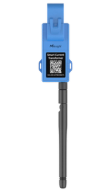
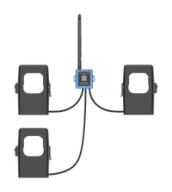
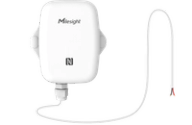
- Add sub-meters where there are none: Wireless current clamps such as the Milesight CT103 on the large consumers (HVAC, lighting circuits, process lines) and pulse readers such as the EM300-DI on gas and water meters. LoRaWAN reaches through floors and walls, and batteries last years.
- One platform for every site: Dashboards per building and for the whole portfolio, alerts when a system runs out of hours, the history kept for the five years the RITE asks for, and an API to pull the data into the audit, the energy management system or the sustainability report.
Our LoRaWAN device library lists the energy meters and clamps with their decoder ready for the platform.
How to plan a pilot
- 1. Start where the obligation is: The site with the highest consumption, the building above 290 kW or the one whose audit is next.
- 2. List what is already metered: Meters, analysers and BMS points that can be read, and the large consumers that have no meter at all.
- 3. Measure a few weeks before changing anything: The baseline is what later shows whether a measure saved what it promised, which is what the audit and a green loan will ask.
- 4. Set the alerts and extend: Out-of-hours consumption, a system that never switches off, a site that drifts from the rest. Then copy the same dashboards and rules to the next building.
What to ask a provider
- Does it read my existing meters and BMS?: If the answer is to replace them, the project starts with a cost it does not need.
- How long is the history kept, and can I get it out?: The RITE asks for five years; an audit cycle is four. The data has to be yours and reachable through an API.
- Can it compare many sites with the same rules?: A portfolio is where the savings and the reporting add up.
- Does it claim to certify compliance?: No platform does. It provides the measured data; the auditor, the certifier and the authority decide.
Cloud Studio IoT runs in AWS (Frankfurt for Europe) or on your own servers, and under your brand if you are an integrator or an energy services company. Tell us about your sites.
Sources
- Royal Decree 56/2016 (BOE)
- Law 18/2014, articles 80 and 82 (BOE)
- Directive (EU) 2023/1791 (EUR-Lex)
- Directive (EU) 2026/470, Omnibus I (EUR-Lex)
- RITE, consolidated text (BOE)
- Directive (EU) 2024/1275 (EUR-Lex)
- Order ECO/805/2003, consolidated (BOE)
- EBA Guidelines on the management of ESG risks
- Delegated Regulation (EU) 2021/2139 (EUR-Lex)
- Law 21/1992 on Industry (BOE)