

Skip to main content

Transform Transportation with Smart Mobility

Create safer, more efficient, and sustainable transportation systems with IoT technology.

Transform Transportation with
150,000+

Devices connected to the platform

LoRaWAN

Also MQTT and HTTP, and Modbus or OPC UA through a software gateway on the edge

5

Alarm channels: email, SMS, WhatsApp, voice call and push

99.9%

Platform availability, excluding scheduled maintenance

2

Ways to run it: our cloud on AWS or your own servers

35+

Hardware and integration partners

Not optional

What the law and the lenders already ask of this kind of installation.

  • Required by lawATP Agreement on the international carriage of perishable foodstuffs (consolidated text, BOE 2 October 2026)Amendments in force since 25 August 2026, to be applied by 25 August 2027.
  • Required by lawRegulation (EC) 37/2005 and Spain Orden ICT/155/2020, Annex XI: temperature recordersIn force.
  • Required by lawSpain Royal Decree 450/2026 on intelligent transport systems (Directive 2010/40/EU as amended by Directive (EU) 2023/2661)Access restrictions and loading rules in urban nodes by 31 December 2026; truck parking availability by 31 December 2027.
  • Required by lenders and insurersDelegated Regulation (EU) 2021/2139 (EU Taxonomy), activity 6.6 road freight
What each rule requires
01
150,000+

Connected devices

02
5

Alarm channels

03
99.9%

Platform availability

Smart City Traffic
01

Smart City Traffic

Cities reduce congestion and improve safety with intelligent transportation systems.

Public Transit Optimization
02

Public Transit Optimization

Public transit agencies improve service reliability and passenger experience.

Complete Transportation Solutions

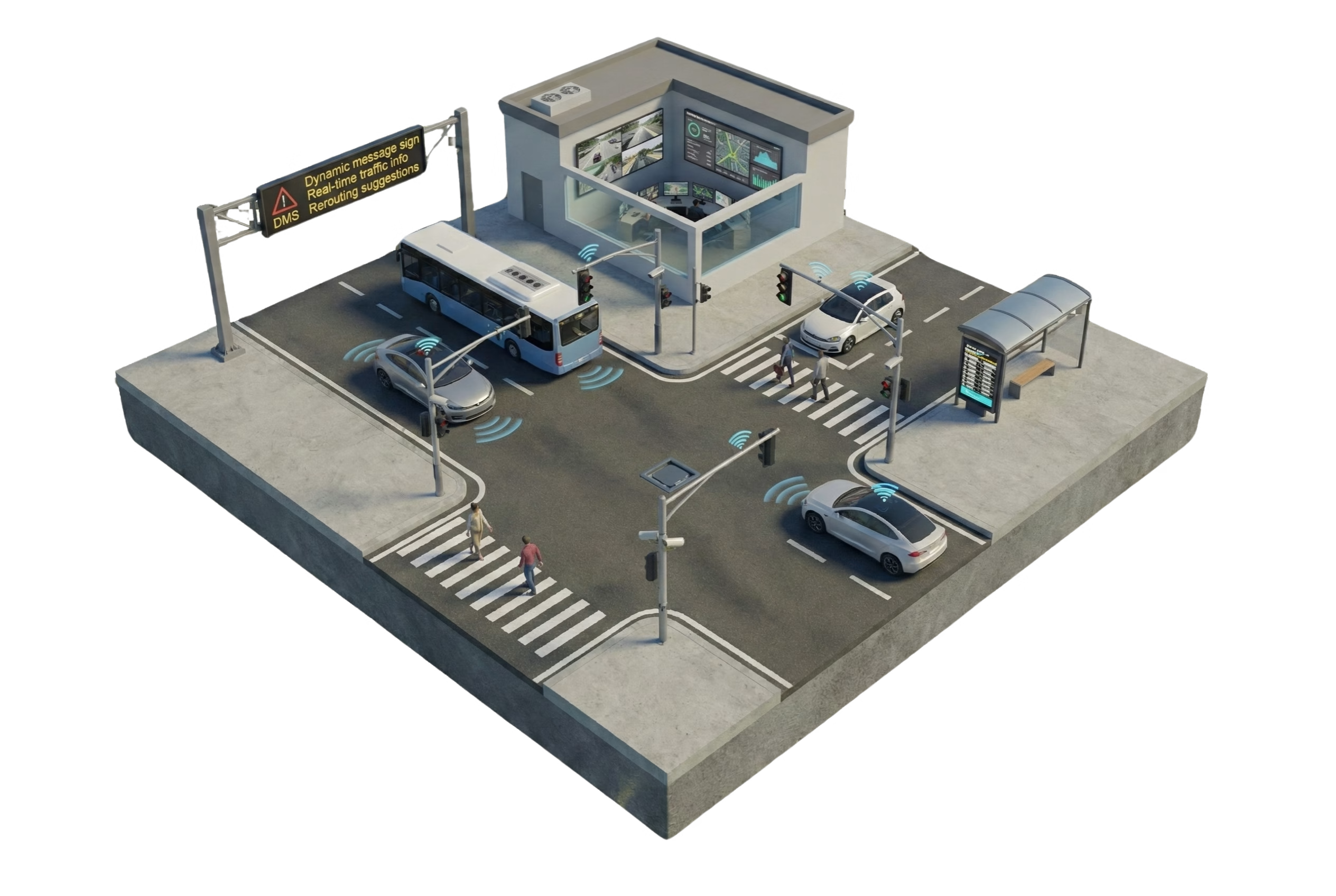
IoT technology for smarter roads, vehicles, and transit systems.

Traffic Management

Real-time traffic monitoring with data for the traffic control centre through the API.

Fleet Tracking

Real-time location and status monitoring for vehicles.

Video Analytics

Events from AI cameras for traffic and safety monitoring.

Transit Systems

Optimize public transportation routes and schedules.

Incident Management

Automated incident detection and response coordination.

Smart Parking

Guide drivers to available parking spaces.

Regulations and certifications

What is required by law, what lenders and insurers ask for, and what is optional, with how continuous monitoring helps document it. The platform supports compliance; it does not certify it.

Required by law

Rules in force for the buildings and operators in their scope. Not meeting them can bring inspections, fines or loss of a licence.

  • Required by lawInternationalLaw

    ATP Agreement on the international carriage of perishable foodstuffs (consolidated text, BOE 2 October 2026)

    Annex 2, Appendix 1

    What it requires: In international carriage of quick-frozen food the transport unit carries an instrument that measures, records and stores air temperature, compliant with EN 12830:2018 and verified under EN 13486:2023. Readings are dated and kept at least one year.

    Applies: Amendments in force since 25 August 2026, to be applied by 25 August 2027.

    How monitoring helps: Continuous, dated temperature history with excursion alarms and trip reports. It is the ATP recorder only if the device is certified to EN 12830:2018 and verified; otherwise it is a live layer next to the certified recorder.

    Official source
  • Required by lawSpainLaw

    Regulation (EC) 37/2005 and Spain Orden ICT/155/2020, Annex XI: temperature recorders

    Regulation 37/2005, article 2; Orden ICT/155/2020, Annex XI, section 5

    What it requires: Vehicles and stores carrying quick-frozen food record air temperature at frequent, regular intervals with instruments compliant with EN 12830, keeping dated records at least one year. In Spain, recorders used to meet a legal requirement are under State metrological control, with periodic verification every two years.

    Applies: In force.

    How monitoring helps: Keeps the dated history and the alarms for as long as needed; legal compliance depends on the certified and verified instrument.

    Official source
  • Required by lawSpainLaw

    Spain Law 7/2021 (article 14) and Royal Decree 1052/2022 on low-emission zones, as amended by Royal Decree 953/2026

    Law 7/2021, article 14.3; RD 1052/2022, articles 10 and 12

    What it requires: Municipalities above 50,000 inhabitants, island territories and those above 20,000 that exceed air quality limits must have low-emission zones, with continuous monitoring of each zone and its surroundings. Minimum indicators: NO2, the share of private car trips and the share of zero-emission vehicles in private, goods and public transport fleets.

    Applies: Plans were due before 2023. The zone is reported to the ministry within a month of being set up, reviewed after three years and every four after that.

    If it is not met: Since November 2026, until the council proves that access control, monitoring and follow-up are working, the zone is not considered correctly established.

    How monitoring helps: Indicative NO2 and noise sensors to cover more streets and the edges of the zone, plus parking and fleet data. They do not replace the reference stations that the air quality rules require.

    Official source
  • Required by lawEuropean UnionLaw

    Spain Royal Decree 450/2026 on intelligent transport systems (Directive 2010/40/EU as amended by Directive (EU) 2023/2661)

    Articles 6 and 8; Annex II

    What it requires: Traffic authorities, infrastructure managers, transport operators and mobility providers publish the data listed in Annex II through the National Access Points, such as access restrictions in regulated zones, loading and unloading rules and, later, live availability of truck parking.

    Applies: Access restrictions and loading rules in urban nodes by 31 December 2026; truck parking availability by 31 December 2027.

    How monitoring helps: Parking bay sensors produce live free-space data, and the API can feed whoever publishes to the access point. We are not a National Access Point.

    Official source
  • Required by lawSpainLaw

    Spain Law 9/2025 on sustainable mobility, article 26: commuting plans

    Articles 26, 106.2 and 107.2

    What it requires: Companies and public bodies need a sustainable commuting plan, agreed with worker representatives, for each workplace with more than 200 workers or 100 per shift, and a follow-up report every two years. Sites above 1,000 workers in large metropolitan areas add peak-hour and low-emission measures.

    Applies: In force since December 2025.

    If it is not met: Not having the plan or the follow-up report is a minor infringement of 101 to 2,000 euros when it harms the mobility system.

    How monitoring helps: Shuttle and fleet GPS, parking occupancy and charging energy feed the follow-up report; the plan itself is written by the company.

    Official source
  • Required by lawEuropean UnionLaw

    Regulation (EU) 165/2014 on tachographs, as amended by Regulation (EU) 2020/1054

    Article 3(4) and 3(4a)

    What it requires: Vehicles in international transport carry a version 2 smart tachograph that records driving and rest times, border crossings and loading and unloading.

    Applies: Heavy vehicles in international transport since 19 August 2025; light commercial vehicles above 2.5 t since 1 July 2026.

    If it is not met: Penalties set by each Member State.

    How monitoring helps: Our GPS trackers are not tachographs and do not replace one. They add what the tachograph does not hold: cargo temperature, door openings, trailer location and idle time.

    Official source
  • Required by lawUnited StatesLaw

    21 CFR 1.908 and 1.912, sanitary transportation of human and animal food

    §1.908(e) and §1.912

    What it requires: A carrier responsible for temperature must pre-cool refrigerated compartments and, when the shipper or receiver asks, show it kept the agreed temperature, for example with time and temperature data from the trip. Procedures and agreements are kept 12 months beyond use; electronic records are allowed.

    Applies: In force.

    How monitoring helps: Continuous reefer temperature with position, pre-cool checks and exportable trip reports: the time and temperature data the rule names.

    Official source
  • Required by lawUnited StatesLaw

    49 CFR Part 395, hours of service and electronic logging devices

    §395.8 and Subpart B

    What it requires: Motor carriers record drivers' duty status with an ELD from FMCSA's registered list and keep records at least six months.

    Applies: In force since December 2017.

    How monitoring helps: Our devices are not ELDs and are not on the FMCSA list. They complement the ELD with cargo and asset data.

    Official source

Required by lenders, insurers and investors

Not a legal duty for the owner, but it decides financing terms, insurance or the value of the asset.

  • Required by lenders and insurersEuropean UnionLaw

    Delegated Regulation (EU) 2021/2139 (EU Taxonomy), activity 6.6 road freight

    Annex I, 6.6

    What it requires: For a fleet to be financed as green, light vans must have zero tailpipe CO2 and trucks must be zero-emission, or low-emission above 7.5 t where zero is not feasible, without carrying fossil fuels.

    If it is not met: No penalty: a fleet that does not meet the criteria cannot be counted as a green asset.

    How monitoring helps: The criteria depend on the vehicle, not on monitoring. Our data documents use, kilometres and charging energy for the lender's report.

    Official source

Fleets, cold transport and city mobility: what the rules ask to record and what a tracker can and cannot do

Transport has its own certified devices: tachographs for driving times, ELDs in the United States, temperature recorders for frozen food. Around them, new obligations ask for data that those devices do not hold: proof that a load kept its temperature, live parking availability for the national access points, indicators for low-emission zones and commuting plans for large workplaces. This guide explains each rule, where a monitoring platform adds value and where the certified device is still required.

Refrigerated transport

The ATP Agreement, updated in the BOE in October 2026, requires an instrument that measures, records and stores air temperature in international carriage of quick-frozen food, compliant with EN 12830:2018 and verified under EN 13486:2023, with readings kept at least one year. In Spain, recorders used to meet a legal requirement are also under metrological control with verification every two years. In the United States, a carrier responsible for temperature must pre-cool and, when asked, prove it kept the agreed temperature with time and temperature data from the trip.

Wireless probes give the live layer: alarms during the trip, door openings and position. They count as the legal recorder only when the model is certified to EN 12830 and verified; otherwise they work next to the certified recorder.

Cities and workplaces

Spanish municipalities above 50,000 inhabitants must have low-emission zones with continuous monitoring of the zone and its surroundings, and indicators such as NO2 and the share of zero-emission vehicles. Since November 2026, until the council proves the monitoring works, the zone is not considered correctly established. Royal Decree 450/2026 asks transport authorities and operators to publish access restrictions and loading rules through the national access points by the end of 2026, and live truck parking availability by the end of 2027.

Companies have their own duty: Law 9/2025 requires a sustainable commuting plan for each workplace with more than 200 workers or 100 per shift, with a follow-up report every two years. According to the EEA, reaching WHO guideline levels could have prevented about 34,000 deaths related to NO2 in the EU in 2023.

RuleWhoData that answers it
ATP, Reg. 37/2005Carriers of frozen foodTemperature per trip, from a certified recorder
Low-emission zones (RD 1052/2022)CouncilsNO2, traffic and fleet indicators
RD 450/2026 (ITS)Authorities and operatorsLive parking and loading bay availability
Law 9/2025Workplaces above 200 workersShuttles, parking and charging

What to measure

  • Trailers, containers and assets: Battery GPS trackers such as the Digital Matter Oyster for location and dwell time of assets without power.
  • Cargo temperature: Probes such as the Milesight EM300-TH in the cargo area, with alarms during the trip.
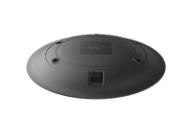
  • Parking and loading bays: In-ground sensors such as the Nwave NPS405 give the live occupancy that the access points ask for.
  • Air in and around the zone: Indicative NO2 and particle sensors to cover more streets than the reference stations; they do not replace them.

What a tracker is not: our devices are not tachographs and not ELDs, and they do not replace either. LoRaWAN coverage along routes and across borders has gaps, so devices store and resend, or the vehicle carries a gateway with mobile backhaul.

How to plan a pilot

  • 1. Pick the asset that costs most when lost: A refrigerated trailer, a fleet of containers, or the loading bays of a busy street.
  • 2. Keep the certified devices: Tachograph and temperature recorder stay; the platform adds the live layer and reads them where they have an interface.
  • 3. Report what the customer or authority asks: Trip temperature reports, occupancy feeds or zone indicators.

Cloud Studio IoT runs in AWS (Frankfurt for Europe, US for the Americas) or on your own servers, and under your brand if you are a telematics provider or an integrator. Tell us about your fleet or city.


Sources

  1. ATP Agreement, consolidated text (BOE, October 2026)
  2. Royal Decree 1052/2022 on low-emission zones (BOE)
  3. Royal Decree 450/2026 on ITS (BOE)
  4. Law 9/2025 on sustainable mobility (BOE)
  5. 21 CFR 1.908, sanitary transportation (eCFR)
  6. EEA, air quality and deaths in the EU (December 2025)

Intelligent Transportation IoT: Frequently Asked Questions

Everything you need to know about implementing IoT in transportation and fleet management

Get Started

Move smarter, not harder

Transform transportation with IoT technology.