

Skip to main content

Optimize Facilities with Smart Management

Streamline facility operations, reduce costs, and improve asset performance with IoT.

Optimize Facilities with
40%

Reduction in maintenance costs

35%

Improvement in asset performance

50%

Faster issue resolution

30%

Energy consumption reduction

45%

Improvement in compliance

25%

Better occupant experience

Not optional

What the law and the lenders already ask of this kind of installation.

  • Required by lawRITE (Royal Decree 1027/2007), maintenance records and inspectionsOngoing: yearly certificate, inspections every 4 and 15 years.
  • Required by lawRITE (Royal Decree 1027/2007), building automation and control systemsNew installations since July 2021; existing buildings by 2025. Already in force.
  • Required by lawDirective (EU) 2024/1275 (EPBD), building automation and control systemsHeating or air-conditioning above 290 kW: by 31 December 2024. Above 70 kW: by 31 December 2029. Lighting controls: 2027 above 290 kW, 2029 above 70 kW.
  • Required by lenders and insurersEBA Guidelines on the management of ESG risks (EBA/GL/2025/01)Applies to banks since 11 January 2026; small and non-complex banks by 11 January 2027.
What each rule requires
01
Maintenance cost reduction
40%

Maintenance cost reduction

02
Faster response times
50%

Faster response times

03
Asset lifespan extension
30%

Asset lifespan extension

Commercial Property Management
01

Commercial Property Management

Property managers reduce costs and improve tenant satisfaction with smart facility management.

Campus Operations
02

Campus Operations

Large facilities achieve operational excellence with integrated IoT monitoring and management.

Complete Facility Management Solutions

Integrated platform for monitoring, maintaining, and optimizing facility operations.

CMMS Integration

Computerized maintenance management system integration.

Maintenance Alerts

Equipment monitoring with alarms when readings drift out of range.

Energy Monitoring

Track and optimize energy consumption across facilities.

Compliance Management

Automated compliance tracking and reporting.

Performance Analytics

Comprehensive dashboards and reporting.

Asset Tracking

Real-time location and status of facility assets.

Regulations and certifications

What is required by law, what lenders and insurers ask for, and what is optional, with how continuous monitoring helps document it. The platform supports compliance; it does not certify it.

Required by law

Rules in force for the buildings and operators in their scope. Not meeting them can bring inspections, fines or loss of a licence.

  • Required by lawSpainLaw

    RITE (Royal Decree 1027/2007), maintenance records and inspections

    Articles 27, 28 and 31; IT 4

    What it requires: Every thermal installation must keep a log of maintenance and repairs for at least five years, with an annual maintenance certificate where a contract is required. Generators above 70 kW are inspected for energy efficiency every four years, and the whole installation every fifteen.

    Applies: Ongoing: yearly certificate, inspections every 4 and 15 years.

    If it is not met: RITE breaches are sanctioned under the Industry Act (Ley 21/1992), enforced by the regions. Not having a mandatory maintenance contract or running installations that have not passed inspection are serious infractions, with fines of up to 6 million euros; minor ones go up to 60,000 euros.

    How monitoring helps: Equipment hours, alarms and readings stored per installation feed the maintenance log and give the inspector measured data on how each generator actually ran.

    Official source
  • Required by lawSpainLaw

    RITE (Royal Decree 1027/2007), building automation and control systems

    IT 1.2.4.3.5, added by Royal Decree 178/2021

    What it requires: Non-residential buildings whose heating, cooling or combined systems exceed 290 kW must have a building automation and control system, where technically and economically feasible. It must continuously monitor, log and analyse energy use, benchmark efficiency, detect losses and be interoperable.

    Applies: New installations since July 2021; existing buildings by 2025. Already in force.

    If it is not met: RITE breaches are sanctioned under the Industry Act (Ley 21/1992), enforced by the regions. Not having a mandatory maintenance contract or running installations that have not passed inspection are serious infractions, with fines of up to 6 million euros; minor ones go up to 60,000 euros. A compliant system also exempts the building from the periodic energy efficiency inspections of IT 4.

    How monitoring helps: The platform provides the monitoring, logging, benchmarking and loss detection part across manufacturers: it reads the BMS, chillers, boilers and meters over BACnet or Modbus through an edge gateway, keeps the history and alerts the maintenance team. Control stays with the BMS.

    Official source
  • Required by lawSpainLaw

    RITE (Royal Decree 1027/2007), temperature limits and display

    IT 3.8.2 and IT 3.8.3

    What it requires: In administrative, commercial and public-assembly premises, heating may not be set above 21 °C nor cooling below 26 °C, with relative humidity between 30% and 70%. Premises over 1,000 m² must show temperature and humidity on a visible display.

    Applies: In force.

    If it is not met: RITE breaches are sanctioned under the Industry Act (Ley 21/1992), enforced by the regions. Not having a mandatory maintenance contract or running installations that have not passed inspection are serious infractions, with fines of up to 6 million euros; minor ones go up to 60,000 euros.

    How monitoring helps: Temperature and humidity sensors per zone log the values every few minutes, so the building can prove it stayed within limits and see where it did not.

    Official source
  • Required by lawSpainLaw

    RITE (Royal Decree 1027/2007), indoor air quality

    IT 1.1.4.2.2 and 1.1.4.2.3

    What it requires: Non-residential buildings must reach the indoor air category for their use: IDA 2 for offices and classrooms (12.5 litres of outdoor air per second per person), IDA 1 for nurseries and hospitals, IDA 3 for shops, restaurants and gyms. The CO2 method (500 ppm above outdoor air for IDA 2) is reserved for premises with high physical activity or high pollutant production.

    Applies: In force for every installation designed under the RITE.

    If it is not met: RITE breaches are sanctioned under the Industry Act (Ley 21/1992), enforced by the regions. Not having a mandatory maintenance contract or running installations that have not passed inspection are serious infractions, with fines of up to 6 million euros; minor ones go up to 60,000 euros.

    How monitoring helps: CO2 measured per room shows whether the ventilation designed on paper is delivered in use, room by room and hour by hour, with an alert when a space runs short of fresh air.

    Official source
  • Required by lawSpainLaw

    Royal Decree 486/1997 on workplaces

    Annex III, environmental conditions

    What it requires: Offices and similar sedentary work must stay between 17 and 27 °C (14 to 25 °C for light work), with relative humidity between 30% and 70% and at least 30 m³ of fresh air per hour per worker (50 m³ in other cases). It sets no CO2 limit.

    Applies: In force for every workplace.

    If it is not met: It is an occupational health and safety rule, enforced by the labour inspectorate; the decree itself sets no fine amounts.

    How monitoring helps: Temperature, humidity and CO2 per room, logged continuously, show whether each workspace stays within the ranges and give the prevention service a record when an employee complains.

    Official source
  • Required by lawEuropean UnionLaw

    Directive (EU) 2024/1275 (EPBD), building automation and control systems

    Article 13(9), (10) and (12)

    What it requires: Member States must require non-residential buildings to have a building automation and control system (BACS), where technically and economically feasible. The BACS must continuously monitor, log and analyse energy use, benchmark efficiency and detect losses, work with equipment from different manufacturers and, since 29 May 2026, monitor indoor environmental quality. Lighting controls with occupancy detection follow.

    Applies: Heating or air-conditioning above 290 kW: by 31 December 2024. Above 70 kW: by 31 December 2029. Lighting controls: 2027 above 290 kW, 2029 above 70 kW.

    If it is not met: Each Member State sets the penalties, which the directive requires to be effective, proportionate and dissuasive (Article 34). The directive does not require any ISO 52120 class.

    How monitoring helps: The platform covers the monitoring, logging, benchmarking and multi-vendor part: it reads the existing BMS, chillers and meters over BACnet or Modbus through an edge gateway, adds wireless meters and indoor air quality sensors, keeps the history and raises alerts on losses. Control of the plant stays with the BMS.

    Official source
  • Required by lawUnited StatesLaw

    OSH Act General Duty Clause and indoor air quality

    Section 5(a)(1)

    What it requires: OSHA has no indoor air quality standard (it withdrew its proposal in 2001), but employers must keep the workplace free of recognized hazards, and OSHA's ventilation and air contaminant standards still apply.

    How monitoring helps: A record of CO2, temperature and humidity per room shows when ventilation fell short and what was done about it.

    Official source

Required by lenders, insurers and investors

Not a legal duty for the owner, but it decides financing terms, insurance or the value of the asset.

  • Required by lenders and insurersEuropean UnionGuideline

    EBA Guidelines on the management of ESG risks (EBA/GL/2025/01)

    Paragraphs 28, 31 and 32

    What it requires: Banks must take the energy efficiency of residential and commercial real estate into account when assessing transition risk and, where material, build it into credit scoring and the valuation of collateral. For large corporate borrowers they should collect the energy efficiency of the real estate.

    Applies: Applies to banks since 11 January 2026; small and non-complex banks by 11 January 2027.

    If it is not met: Not a duty for the owner. In practice a less efficient building is a weaker collateral: it can mean worse loan terms or a lower valuation.

    How monitoring helps: Measured consumption and indoor conditions, kept as a history per building, give the owner evidence of how the building performs in use, beyond the certificate, to show a lender or valuer.

    Official source

Technical references

Standards and guides that become binding where a regulation or the authority adopts them, and the yardstick an inspector or auditor uses.

  • Technical referenceUnited StatesStandard

    ANSI/ASHRAE/IES Standard 90.1

    HVAC off-hour controls and occupied standby; lighting shutoff

    What it requires: The commercial energy standard behind most state codes. It requires off-hour and setback controls for HVAC, shutting off ventilation air to unoccupied zones, and automatic shutoff of general lighting by schedule or occupancy sensors.

    Applies: Binding where the state or city energy code adopts it; DOE affirmed the 2022 edition in March 2024.

    How monitoring helps: Occupancy and indoor air sensors show which zones are actually empty and whether the HVAC really sets back after hours, which is how these controls are checked in use.

    Official source

Facility management with IoT: the records the rules ask for and how to keep them measured

A facility manager answers for more than comfort. Thermal installations, indoor air, working conditions and hot water systems each come with a rule that asks for records, inspections and limits, and when an inspector, an auditor or an employee asks, a paper log and a monthly round are a weak answer. This guide lists what has to be documented, which sensors produce that record on their own and how they fit with the BMS and the maintenance software already in place.

What a facility manager has to be able to prove

In Spain the RITE requires every thermal installation to keep a log of maintenance and repairs for at least five years, with an annual maintenance certificate where a maintenance contract is mandatory. Generators above 70 kW are inspected for energy efficiency every four years and the whole installation every fifteen. Running without the mandatory contract or without passing inspections is a serious infraction under the Industry Act, with fines of up to 6 million euros.

The same regulation sets how the building has to run. Administrative, commercial and public-assembly premises may not heat above 21 °C nor cool below 26 °C, with humidity between 30% and 70%, and premises over 1,000 m² must show temperature and humidity on a visible display. Offices and classrooms need IDA 2 indoor air, 12.5 litres of outdoor air per second per person. Royal Decree 486/1997 adds the workplace ranges: 17 to 27 °C for sedentary work and at least 30 m³ of fresh air per hour per worker.

And where there is hot water for people, Royal Decree 487/2022 on Legionella asks, for installations in its scope, for daily temperature checks in the final storage tanks and the return circuit, monthly checks at a rotating sample of taps and showers, and records of every control kept for at least five years.

RuleWhat it asks forHow oftenRecord kept
RITE, maintenanceMaintenance and repair log, annual certificateOngoing, yearly5 years
RITE, inspectionsEfficiency of generators over 70 kW, whole installationEvery 4 and every 15 yearsInspection report
RITE, temperature limits21 °C heating, 26 °C cooling, display over 1,000 m²In forceNot set
Royal Decree 486/199717 to 27 °C, 30-70% humidity, 30 m³/h per workerIn forceNot set
Royal Decree 487/2022Hot water temperature in tanks, return and tapsDaily, weekly and monthly5 years

What is already mandatory, what is coming and what banks look at

In Spain the RITE already requires it. Non-residential buildings with more than 290 kW of heating or cooling had to have a building automation and control system by 2025, able to monitor, log and analyse energy use continuously and to detect losses. Installations above 70 kW must meter fuel and electricity separately, and the maintenance company has to keep five years of consumption. Running without the mandatory maintenance contract or without passing inspections is a serious infraction under the Industry Act, with fines of up to 6 million euros.

What is coming is Directive (EU) 2024/1275. It lowers the automation threshold to 70 kW by the end of 2029, adds monitoring of indoor environmental quality, and requires every non-residential building to leave the worst 16% of the national stock by 2030 and the worst 26% by 2033. Spain had to transpose it by 29 May 2026; in November 2026 there are only drafts of the new CTE and RITE under consultation, so the dates are running even though the Spanish text is not published yet.

And where there is no fine, the bank is already looking. Since 12 August 2025 every mortgage valuation in Spain includes the registered energy certificate, and since January 2026 the EBA guidelines ask banks to weigh the energy efficiency of real estate in credit risk and in the valuation of collateral. To count as a green asset under the EU Taxonomy a building needs an A rating or to be in the top 15%, and above 290 kW it must also prove it is operated with energy performance monitoring.

RuleWhoWhenType
RITE, automation and controlNon-residential, over 290 kWSince 2025Law (Spain)
RITE, metering and 5-year recordInstallations over 70 kWIn forceLaw (Spain)
EPBD, automation and controlNon-residential, over 70 kWBy end of 2029EU law, pending in Spain
EPBD, minimum standardsAll non-residential2030 and 2033EU law, pending in Spain
Certificate in the mortgage valuationEvery mortgaged buildingSince August 2025Lender
EBA guidelines on ESG risksBanks lending on real estateSince January 2026Lender

The platform does not certify anything. It provides the continuous measurement, history and alerts these rules ask for and a certificate does not have. Each rule, with its article and official source, is in the regulations section of this page.

From the paper log to a measured record

Most of those obligations are about showing how the building behaved between visits. A technician who checks once a month sees one moment; a sensor that reports every few minutes keeps the whole period, with the date and time of every deviation. These are the measurements that cover the table above.

  • Equipment hours and alarms: Boilers, chillers, air handling units and the BMS usually speak Modbus or BACnet. An edge gateway reads them and sends hours, states and alarms to the platform over MQTT, which is what the maintenance log and the inspector need.
  • Temperature, humidity and CO2 per zone: Wireless sensors such as the Milesight AM307 show whether each floor stays within the RITE and workplace ranges and whether fresh air reaches the rooms where people are.
  • Hot water temperature: Probes such as the EM500-PT100 on the tank outlet and the return keep the daily reading the Legionella decree asks for and raise an alert when the temperature drops.
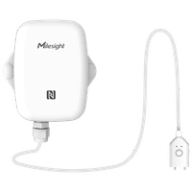
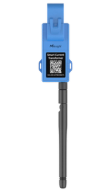
  • Leaks and consumption: Leak sensors such as the EM300-SLD under plant rooms, risers and server rooms, and current clamps such as the CT103 on the large consumers, show a fault before it becomes a claim or an energy bill.

LoRaWAN reaches through floors and walls without new cabling, and the batteries last years. Our device library lists the air quality, leak and energy sensors with their decoder ready for the platform.

How it fits with the BMS and the maintenance software

The BMS keeps controlling the plant; the platform does not replace it. What it adds is one place for every building, including the ones without a BMS, the history the rules ask for, and alerts on readings the BMS does not see, such as a room without fresh air or water under a riser.

The maintenance software (CMMS) keeps the work orders. Through the platform API an alert can open an order in Maximo, ServiceNow, Archibus or the tool already in use, and the measured readings stay attached to the asset for the next inspection.

How to plan a pilot

  • 1. Pick the building with the most exposure: The one with the next inspection, recurring comfort complaints, people at risk from Legionella or the largest thermal installation.
  • 2. Read what already exists: BMS points, meters and equipment alarms first. Sensors only where there is no data: rooms, hot water returns, plant rooms.
  • 3. Set the alerts the rules imply: Temperature outside 21/26 °C, humidity outside 30-70%, CO2 rising in an occupied room, hot water below its set point, a leak, equipment running out of hours.
  • 4. Copy to the rest of the portfolio: Same dashboards, same rules, one view to compare sites and see which one drifts.

What to ask a provider

  • Does it read my BMS and equipment as they are?: If the answer is to replace them, the project starts with a cost it does not need.
  • How long is the history kept, and can I get it out?: The RITE and the Legionella decree ask for five years. The data has to be yours and reachable through an API.
  • Can it open work orders in my CMMS?: An alert that nobody turns into a task does not change anything.
  • Does it claim to certify compliance?: No platform does. It provides the measured record; the maintenance company, the inspector and the authority decide.

Cloud Studio IoT runs in AWS (Frankfurt for Europe) or on your own servers, and under your brand if you are a facility services company or an integrator. Tell us about your buildings.

Sources

  1. Royal Decree 486/1997 on workplaces (BOE)
  2. Royal Decree 487/2022 on Legionella (BOE)
  3. RITE, consolidated text (BOE)
  4. Directive (EU) 2024/1275 (EUR-Lex)
  5. Order ECO/805/2003, consolidated (BOE)
  6. EBA Guidelines on the management of ESG risks
  7. Delegated Regulation (EU) 2021/2139 (EUR-Lex)
  8. Law 21/1992 on Industry (BOE)

Facility Management IoT: Frequently Asked Questions

Everything you need to know about implementing IoT in facility management

Get Started

Transform your facility operations

Reduce costs, improve performance, and enhance occupant experience.