

Skip to main content

Your Cattle Always in Sight

Discover how IoT makes a difference in cattle management.

Your Cattle Always in
35%

Improvement in animal health

25%

Increase in productivity

40%

Reduction in disease spread

30%

Labor efficiency improvement

20%

Cost reduction in operations

25%

Sustainability improvement

Not optional

What the law and the lenders already ask of this kind of installation.

  • Required by lawRoyal Decree 348/2000 on the protection of animals on farms (Directive 98/58/EC)In force for every livestock farm.
  • Required by lawRoyal Decree 787/2023 on identification and registration of bovine, ovine and caprine animalsIn force since January 2024; electronic tags for cattle since 30 June 2025.
  • Required by lawRegulation (EU) 2016/429 (Animal Health Law)Applies since 21 April 2021.
  • Required by lenders and insurersAgroseguro broiler insurance (line 406), 2026 plan
What each rule requires
01
Animal health improvement
35%

Animal health improvement

02
Disease prevention
40%

Disease prevention

03
Productivity increase
25%

Productivity increase

Dairy Farm Optimization
01

Dairy Farm Optimization

Dairy farms improve milk production and animal health with smart monitoring.

Cattle Ranch Management
02

Cattle Ranch Management

Large ranches track and manage cattle across extensive pastures.

Complete Livestock Solutions

IoT technology for healthier livestock and more efficient farms.

GPS Tracking

Monitor animal location and grazing patterns.

Health Monitoring

Track vital signs and detect health issues early.

Temperature Monitoring

Continuous body temperature tracking for disease detection.

Behavior Analysis

Detect anomalies in movement and feeding patterns.

Production Tracking

Monitor milk production, weight gain, and breeding cycles.

Identification

Ear tags and RFID for individual animal tracking.

Regulations and certifications

What is required by law, what lenders and insurers ask for, and what is optional, with how continuous monitoring helps document it. The platform supports compliance; it does not certify it.

Required by law

Rules in force for the buildings and operators in their scope. Not meeting them can bring inspections, fines or loss of a licence.

  • Required by lawSpainLaw

    Royal Decree 348/2000 on the protection of animals on farms (Directive 98/58/EC)

    Annex I, points 2, 3, 5 and 7

    What it requires: Where welfare depends on artificial ventilation, an emergency system to renew the air and an alarm that warns of breakdown, checked regularly. Essential equipment inspected at least daily, air circulation, temperature, humidity and gases kept within harmless limits, and treatments and deaths recorded and kept three years.

    Applies: In force for every livestock farm.

    If it is not met: Animal welfare law (Ley 32/2007): up to 600 euros or a warning if minor, 601 to 6,000 if serious and 6,001 to 100,000 if very serious.

    How monitoring helps: Temperature, humidity and gas sensors in the house with alarms by SMS, email or app, and a record of the daily check. It is a second alarm channel; the farm's own ventilation alarm and backup stay mandatory.

    Official source
  • Required by lawSpainLaw

    Royal Decree 787/2023 on identification and registration of bovine, ovine and caprine animals

    Articles 5, 6, 16, 23, 25 and 29; Annex V

    What it requires: Cattle born from 30 June 2025 carry a conventional tag in the right ear and an electronic tag in the left; sheep and goats carry a conventional tag and an electronic device. A holding register, on paper or computer, kept three years, including changes in production that point to health or welfare problems. Cattle movements, births and deaths reported within seven days.

    Applies: In force since January 2024; electronic tags for cattle since 30 June 2025.

    If it is not met: Animal health law (Ley 8/2003): 600 to 3,000 euros if minor, 3,001 to 60,000 if serious (for example a missing register, or more than 10% of animals unidentified) and up to 1.2 million if very serious.

    How monitoring helps: GPS collars and the platform record location, incidents and production signals such as drops in water use next to the register. They are not official identification: that needs the approved tag or bolus, and the platform files nothing with REGA or SITRAN.

    Official source
  • Required by lawSpainLaw

    Royal Decree 1135/2002 on the protection of pigs

    Annex I, chapter I, points 1 and 7

    What it requires: At the animals' head height, ammonia below 20 ppm and CO2 below 3,000 ppm, with monthly control records (quarterly after a full year within limits). No continuous noise above 85 dB, and permanent access to water.

    Applies: Gas limits in force since 2023, with two years of adaptation for existing farms.

    How monitoring helps: Continuous ammonia and CO2 readings at animal height produce the monthly record on their own. Electrochemical ammonia cells drift and need calibration, so the data backs the record but is not an official measurement.

    Official source
  • Required by lawSpainLaw

    Royal Decree 1053/2022 on the organisation of bovine farms

    Articles 5, 6, 7 and 11

    What it requires: Facilities designed to favour comfort and minimise heat stress, gas and dust levels close to outdoor air, yearly water consumption recorded, and emission reduction techniques notified by the larger farms, with a declaration before 1 March when they change.

    Applies: Applies to existing farms since 1 January 2026; welfare requirements phased in to 2028 and 2030.

    How monitoring helps: Water meters on the supply and troughs give the yearly consumption and alarms for leaks or empty troughs; a temperature-humidity index documents the heat-stress measures, although the decree sets no numeric limit for it.

    Official source
  • Required by lawEuropean UnionLaw

    Regulation (EU) 2016/429 (Animal Health Law)

    Articles 10, 84, 102 and 112-113

    What it requires: Operators are responsible for animal health and for biosecurity suited to species, production and risks, climatic conditions included, and keep records of animals, movements, mortality, biosecurity, treatments and tests for at least three years, on paper or electronically.

    Applies: Applies since 21 April 2021.

    How monitoring helps: Electronic, timestamped mortality and environment records that are easy to export for the authority.

    Official source
  • Required by lawEuropean UnionLaw

    Directive (EU) 2024/1785 (industrial emissions) and Implementing Decision (EU) 2026/2260 for pig and poultry farms

    Annex Ia and articles 70a-70j; Decision 2026/2260, Annex, CU 19 and 20

    What it requires: Pig farms from 350 livestock units and poultry farms from 280 (300 for laying hens) follow operating rules with ammonia limits per house, yearly ammonia monitoring, monthly control of air cleaning systems by continuously recording operating parameters or with alarms, and monitoring of water, electricity, fuel, animals, feed and manure. Cattle are not covered.

    Applies: Transposition was due on 1 July 2026; Spain had not completed it. Farms comply from about 2030 to 2032, depending on size.

    If it is not met: Penalties set by each Member State.

    How monitoring helps: Continuous logging of the air scrubbers' operating parameters, their alarms and the water and energy meters produce those records. Ammonia emissions are calculated, not certified by us.

    Official source
  • Required by lawUnited StatesLaw

    9 CFR Part 86, animal disease traceability

    §86.4(a)(1)

    What it requires: Since 5 November 2024 official ear tags for cattle and bison that must be identified for interstate movement are readable visually and electronically.

    Applies: In force since November 2024.

    How monitoring helps: We do not make electronic ear tags; the GPS location history complements the movement records.

    Official source

Required by lenders, insurers and investors

Not a legal duty for the owner, but it decides financing terms, insurance or the value of the asset.

  • Required by lenders and insurersSpainGuideline

    Agroseguro broiler insurance (line 406), 2026 plan

    Product information document

    What it requires: Heat stroke is an optional cover with limited periods. Losses caused by equipment not working (unless by fire or a weather cause), by cold, by lack of water or by poor water quality are excluded, and the farm must be registered in REGA and meet the Ministry's minimum technical conditions.

    If it is not met: A loss with an excluded cause is not paid.

    How monitoring helps: Timestamped temperature, humidity, equipment status and water flow help show what caused a loss. The policy does not require sensors and we claim no premium discount.

    Official source

Livestock monitoring: barn climate, gases, water and the records each rule asks for

Spain has a quarter of the EU's pigs and almost a quarter of its sheep, and the rules on how they are kept have tightened: ammonia and CO2 limits at the animals' height with monthly records, alarms on artificial ventilation, electronic identification for every new calf, and from 2030 industrial emission rules for the largest pig and poultry farms. This guide explains each obligation, which sensor produces the record and what remains the farmer's, the vet's or the official database's.

What the rules require inside the house

Royal Decree 348/2000, which transposes Directive 98/58/EC, requires farms that depend on artificial ventilation to have an emergency system and an alarm that warns of breakdown, checked regularly, and essential equipment inspected every day. For pigs, Royal Decree 1135/2002 sets ammonia below 20 ppm and CO2 below 3,000 ppm at the animals' head height, with monthly control records. For broilers above 33 kg/m², Royal Decree 692/2010 adds that inside temperature may not exceed outside by more than 3 °C when it is above 30 °C in the shade, and that average humidity over 48 hours may not exceed 70% when it is below 10 °C outside.

Breaches of the welfare rules are fined under Law 32/2007 up to 100,000 euros, and identification breaches under the animal health law up to 1.2 million. Agriculture caused about 94% of EU ammonia emissions in 2023 according to the EEA, which is why the Industrial Emissions Directive will bring pig farms from 350 livestock units and poultry farms from 280 under operating rules with ammonia limits and continuous records of their air scrubbers, from around 2030.

RuleWhat it asksData that answers it
RD 348/2000Ventilation alarm, daily equipment checkClimate and equipment status with alarms
RD 1135/2002 (pigs)NH3 < 20 ppm, CO2 < 3,000 ppm, monthly recordsGas sensors at animal height
RD 692/2010 (broilers)3 °C rule, 48 h humidity, gasesInside and outside temperature and humidity
RD 1053/2022 (cattle), RD 306/2020 (pigs)Water consumption recordedWater meters on supply and troughs

What to measure

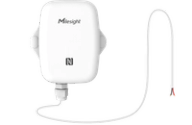
  • House climate: Temperature and humidity inside and outside with sensors such as the Milesight EM300-TH, and the temperature-humidity index as a heat stress indicator. No rule sets a numeric limit for that index.
  • Gases: CO2 at the animals' height, and ammonia with electrochemical cells that need periodic calibration; the data backs the monthly record but is not an official measurement.
  • Water: Meter pulses with a reader such as the Milesight EM300-DI and trough level with a sensor such as the Milesight EM310-UDL: consumption for the records, and alarms for leaks or empty troughs, often the first sign of a sick animal.
  • Extensive herds: GPS collars such as the Digital Matter Oyster for location, geofences and inactivity alerts. They are not official identification, which still needs the approved tag or bolus.

What stays the same: the farm's own ventilation alarm and backup remain mandatory, because a cloud alarm can fail in a power cut. The platform does not file anything with REGA, SITRAN or ECOGAN, and does not replace the vet or the welfare auditor. On remote pastures, LoRaWAN coverage often needs a dedicated solar gateway.

Insurance: proving the cause of a loss

Agroseguro's broiler insurance offers heat stroke as an optional cover but excludes losses caused by equipment not working, unless by fire or a weather cause, and those caused by cold, lack of water or poor water quality. A timestamped history of temperature, humidity, equipment status and water flow is what shows which of those causes it was. The policy does not require sensors and we do not claim any premium discount.

How to plan a pilot

  • 1. One house, one season: The house that suffers most in summer, through one full heat season.
  • 2. Climate, gases and water together: A drop in water use with rising temperature is the earliest warning.
  • 3. Set alarms on the legal limits: 20 ppm ammonia, 3,000 ppm CO2, the 3 °C rule, ventilation stopped.
  • 4. Extend to the farm or the integration: Same rules for every house, one view for the integrator.

Cloud Studio IoT runs in AWS (Frankfurt for Europe) or on your own servers, and under your brand if you are an integrator or a cooperative. Tell us about your farm.

Sources

  1. Royal Decree 348/2000 on farm animal welfare (BOE)
  2. Royal Decree 1135/2002 on pigs (BOE)
  3. Royal Decree 692/2010 on broilers (BOE)
  4. Royal Decree 787/2023 on identification (BOE)
  5. Implementing Decision (EU) 2026/2260 for pig and poultry farms
  6. Eurostat, livestock populations
  7. EEA, Europe's protein supply and ammonia (June 2026)
  8. Agroseguro, broiler insurance 2026
Livestock Tracking IoT: Frequently Asked Questions

Everything you need to know about implementing IoT in livestock management

Get Started

Smarter livestock management

Healthier animals, better yields, lower costs.