


Smart building IoT: what to measure and how it fits your BMS
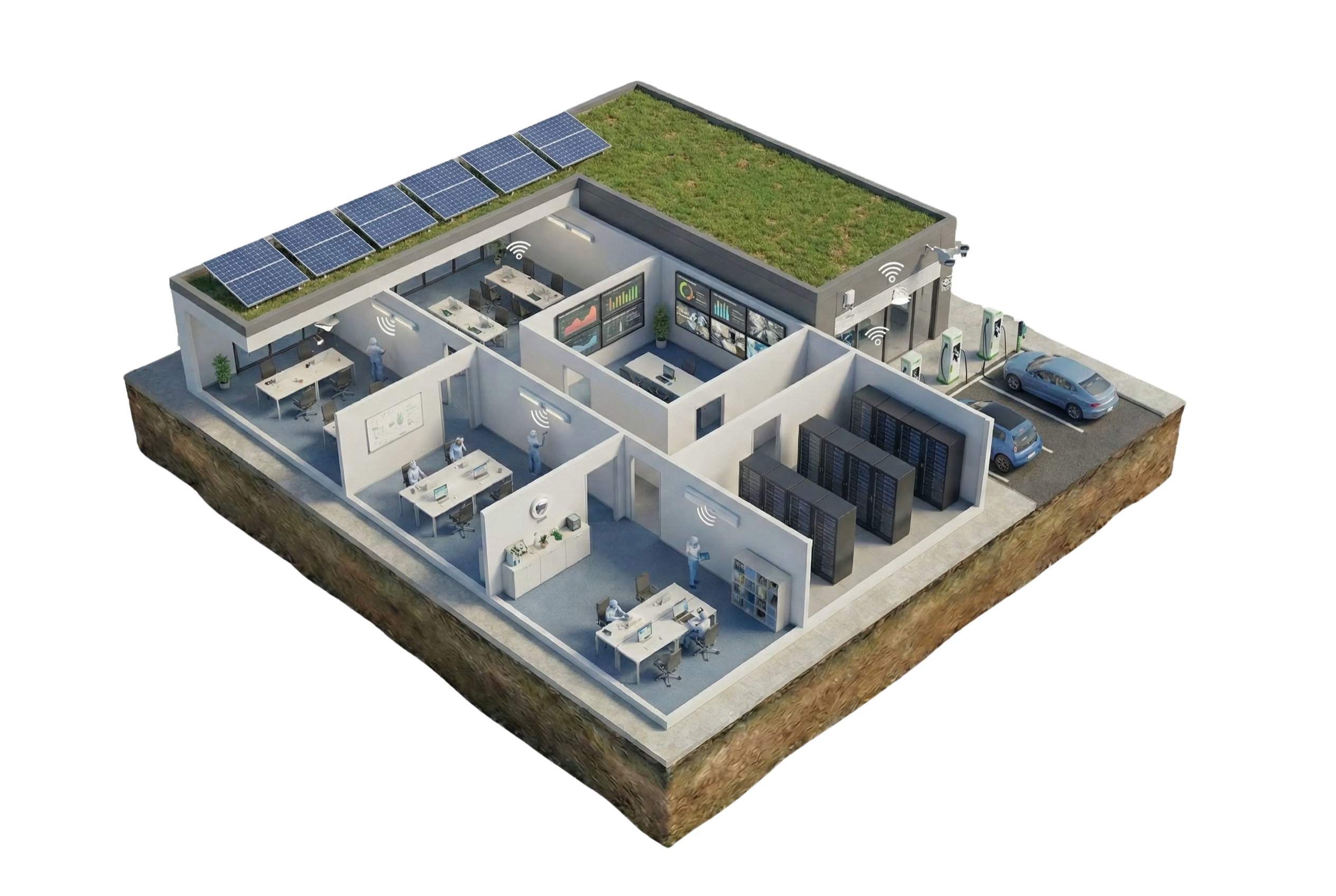
A smart building IoT solution adds sensors where the building has none, reads the systems it already has and puts everything in one platform. The payoff comes from acting on that data: running heating and cooling to real occupancy, catching leaks early and comparing buildings with the same yardstick.
Sensors that pay off first
- Energy meters: Per floor, circuit or large load, to see where the kWh go and which equipment runs out of hours.
- Indoor air quality: CO2, temperature and humidity. CO2 is also a good proxy for how many people are in a room and whether ventilation keeps up.
- Occupancy: Desk and room sensors or people counters, to size spaces and schedule cleaning and climate by real use.
- Water leaks and flow: Leak sensors in risers and plant rooms, and pulse readers on water meters to spot consumption at night.
- Doors and windows: Contacts that tell you a window is open while the heating is on.
- HVAC and plant status: Read from the BMS or straight from chillers, boilers and air handlers over BACnet or Modbus.
Our library of LoRaWAN devices lists air quality, occupancy, energy and leak sensors with their decoders ready for the platform.
Protocols: BACnet, Modbus, LoRaWAN and Zigbee
Most existing building systems speak BACnet or Modbus, and a gateway reads them without replacing anything. New sensors are usually wireless, so nobody has to open ceilings to run cable.
- LoRaWAN: Long range through floors and walls, and batteries that last years. One or two gateways often cover a whole building. More on LoRaWAN.
- Zigbee: A short-range mesh that needs mains-powered devices to relay messages, which suits lighting and smart plugs. We compare it in Zigbee vs Z-Wave.
- BACnet and Modbus: The wired protocols of HVAC, meters and plant equipment. The platform reads them through an edge gateway.
BMS or IoT platform?
They do different jobs and usually work together. The BMS controls one building on site. The IoT platform adds the sensors the BMS doesn't have, covers every building at once and puts dashboards and alerts on the facility team's phone. It can read the BMS through a gateway, so you keep the control you have and gain visibility.
| BMS | IoT platform | |
|---|---|---|
| Scope | One building | Many buildings and sites |
| Main job | Control HVAC, lighting and access | Measure, alert, compare and report |
| Sensors | Wired, installed with the building | Wireless, added in days |
| Access | Workstation on site | Browser and phone |
Where the savings come from
- Climate by occupancy: Heating and cooling schedules that follow real use instead of fixed hours.
- Equipment running out of hours: Chillers, fans or lighting that stay on at night and at weekends.
- Leaks caught early: Water damage stopped before it reaches the floor below.
- Space you can give back: Occupancy data that shows which floors or rooms are rarely used.
Cloud Studio IoT does this for one building or a whole portfolio, in the cloud or on your own servers, and under your brand if you are an integrator.