

Public lighting: the log, the dimming and the data that the rules, the IDAE and the tenders ask for
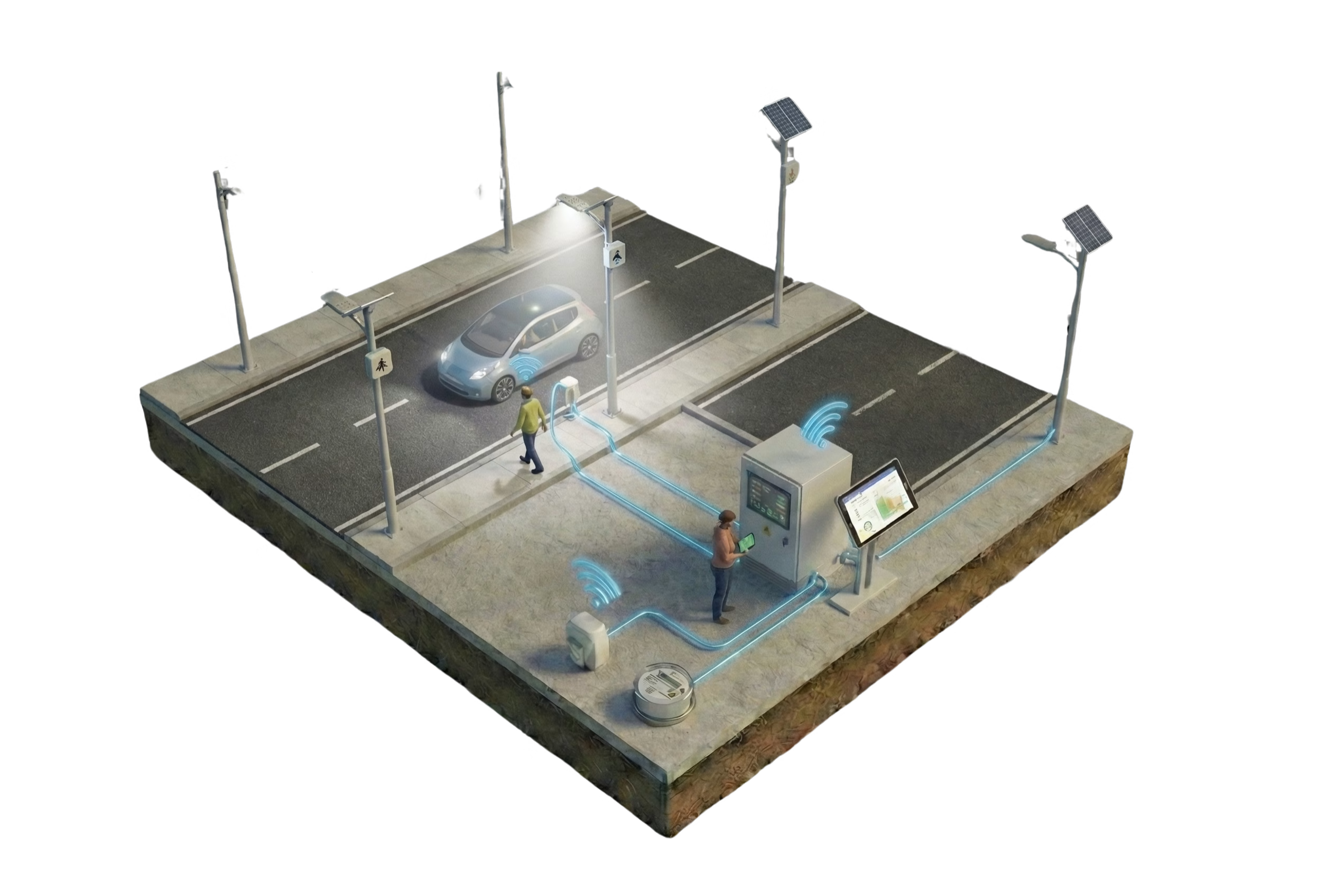
Public lighting is usually the largest electricity bill a council pays, and it is also regulated: levels reduced at night, a maintenance log with consumption and switching times, inspections every five years. The IDAE's zero-interest loans and the green procurement criteria go further and ask for remote management that reports consumption. This guide explains what each rule asks for, which data answers it and where a monitoring platform fits next to the luminaire controllers.
What the rules require
Royal Decree 1890/2008 is still the Spanish rule in force. Installations above 5 kW must reduce lighting levels at certain night hours, down to 50% of the flux, and switch with an astronomical clock or a centralised system. The maintenance log, which can be a computer system, records yearly consumption, switching times, active and reactive energy by time band with the power factor, and maintained lighting levels, and is kept at least five years. Installations above 5 kW are inspected every five years by a control body.
Breaches fall under the Industry Act, with fines of up to 6 million euros for serious ones, and having no dimming where required or no maintenance service are very serious defects in an inspection. Regions add their own rules: Andalusia's Decree 37/2025 keeps lighting off from 23:00 to 06:00 except what safety needs, and fines breaches of the hours up to 30,000 euros.
What the money asks for
According to Orden TED/388/2023, Spanish municipal lighting has about 8.8 million light points that use around 5,296 GWh and cost 741 million euros a year, and about 6 million of them are not yet adapted to current rules. To renovate them, the IDAE lends at zero interest up to 100% of the investment, provided the renovation cuts consumption by at least 45%, reaches class A or B and is run by a centralised remote management system that gives the council consumption, operation and programming data. That system alone is worth 15 of the 100 award points.
The same data pays twice more. The CAE savings certificates calculate savings per dimming period from power and hours and ask for documentation of the control system that reports consumption. Energy performance contracts pay the energy services company for measured savings. And the EU green procurement criteria, which Directive (EU) 2023/1791 asks public buyers to follow, ask for metering per sub-area with data logged every 24 hours and downloadable remotely.
| Who asks | What | Data that answers it |
|---|---|---|
| RD 1890/2008 | Night reduction, maintenance log, five-yearly inspection | Energy, power factor and switching per switchboard |
| IDAE (Orden TED/388/2023) | 45% saving and centralised remote management | Consumption, operation and programming per installation |
| CAE sheet TER180 | Savings per dimming period | Measured power and hours per period |
| Green procurement criteria | Metering per sub-area, data every 24 h | Remote logging of MID meters |
What to measure
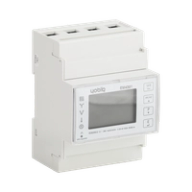
- Energy per switchboard: A three-phase meter such as the YOBIIQ EM4301, or the existing meter read over Modbus, gives active and reactive energy and power factor by time band: the log items the decree lists.
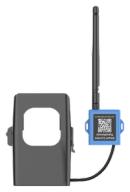
- Switching and dimming per circuit: Current per circuit with clamps such as the Milesight CT105 shows when each circuit switches on and whether power drops in the reduced hours. A step drop points to failed luminaires or a blown fuse.
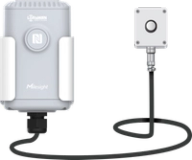
- Light at reference points: A light sensor such as the Milesight EM500-LGT catches circuits on in daylight and shows the trend of maintained levels; the legal photometric measurement is still done with a calibrated luxmeter.
- The switchboard itself: Door opening, residual current device trips and temperature, with an input module such as the Milesight UC300.
Where the platform stops: point-to-point dimming and per-luminaire faults come from luminaire controllers by third parties, which the platform integrates through their API. Meters used as contract evidence must be MID certified, and photometric measurements and certificates belong to the installer and the control body.
How to plan a pilot
- 1. Start with the switchboards that cost most: The ten switchboards with the highest bills, or the ones due for inspection.
- 2. Measure before renovating: A measured baseline is what later proves the 45% for the IDAE, the CAE savings or the energy services contract.
- 3. Alert on what the inspector checks: Circuits on by day, no reduction at night, power factor out of range.
- 4. Extend and integrate the controllers: The rest of the switchboards, and the luminaire controllers already installed, in one view.
Cloud Studio IoT runs in AWS (Frankfurt for Europe) or on your own servers, and under your brand if you are a lighting maintenance company or an energy services company. Tell us about your lighting.