Modernize Poultry Farms with IoT Technology
Optimize bird health, improve productivity, and ensure food safety with smart farming solutions.
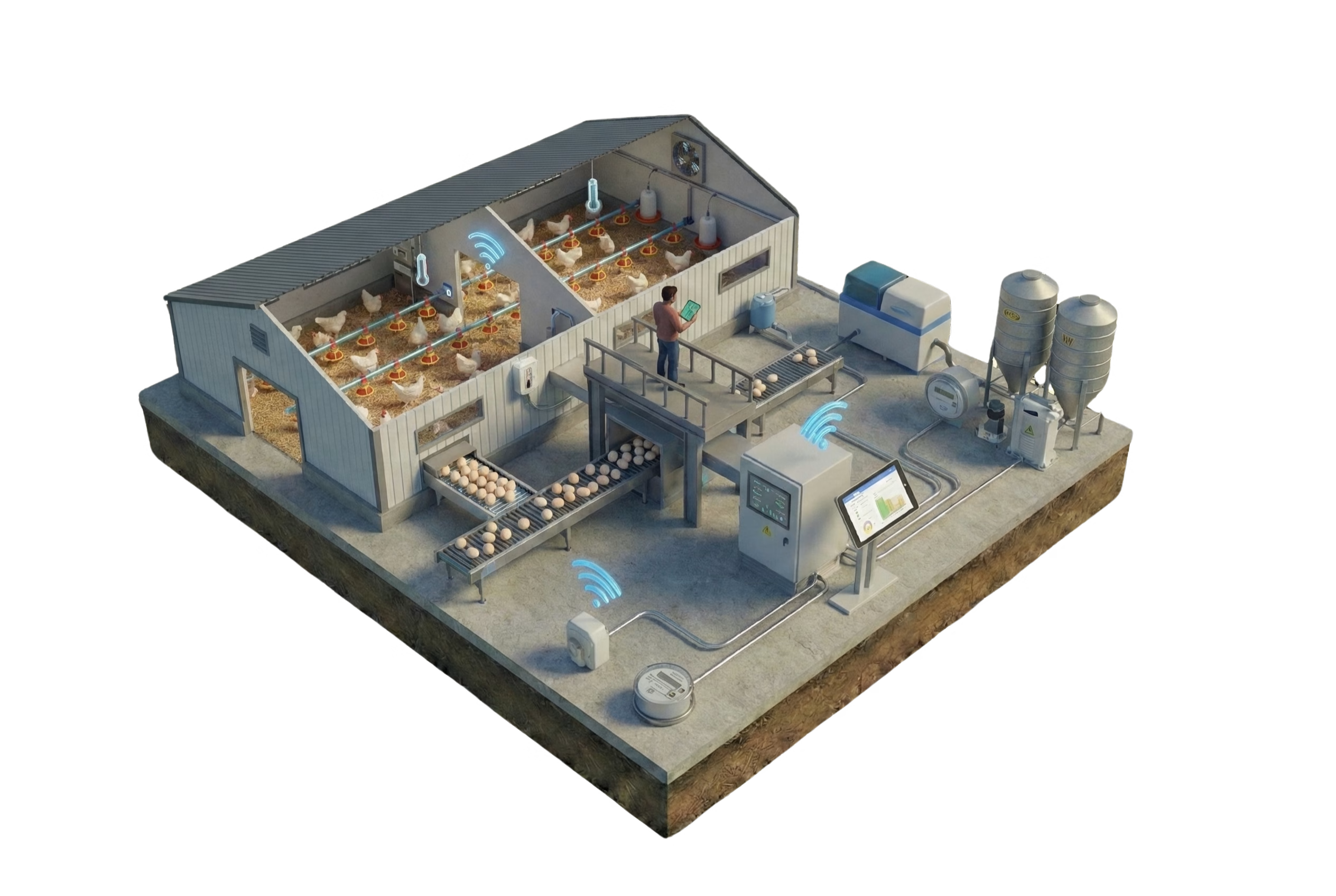
Not optional
What the law and the lenders already ask of this kind of installation.
- Required by lawRoyal Decree 348/2000 on the protection of animals on farms (Directive 98/58/EC)In force for every livestock farm.
- Required by lawRoyal Decree 692/2010 on the protection of broiler chickensIn force; above 33 kg/m² the authority is notified 15 days in advance.
- Required by lawRegulation (EU) 2016/429 (Animal Health Law)Applies since 21 April 2021.
- Required by lenders and insurersAgroseguro broiler insurance (line 406), 2026 plan
Productivity increase
Mortality rate reduction
Operational cost savings
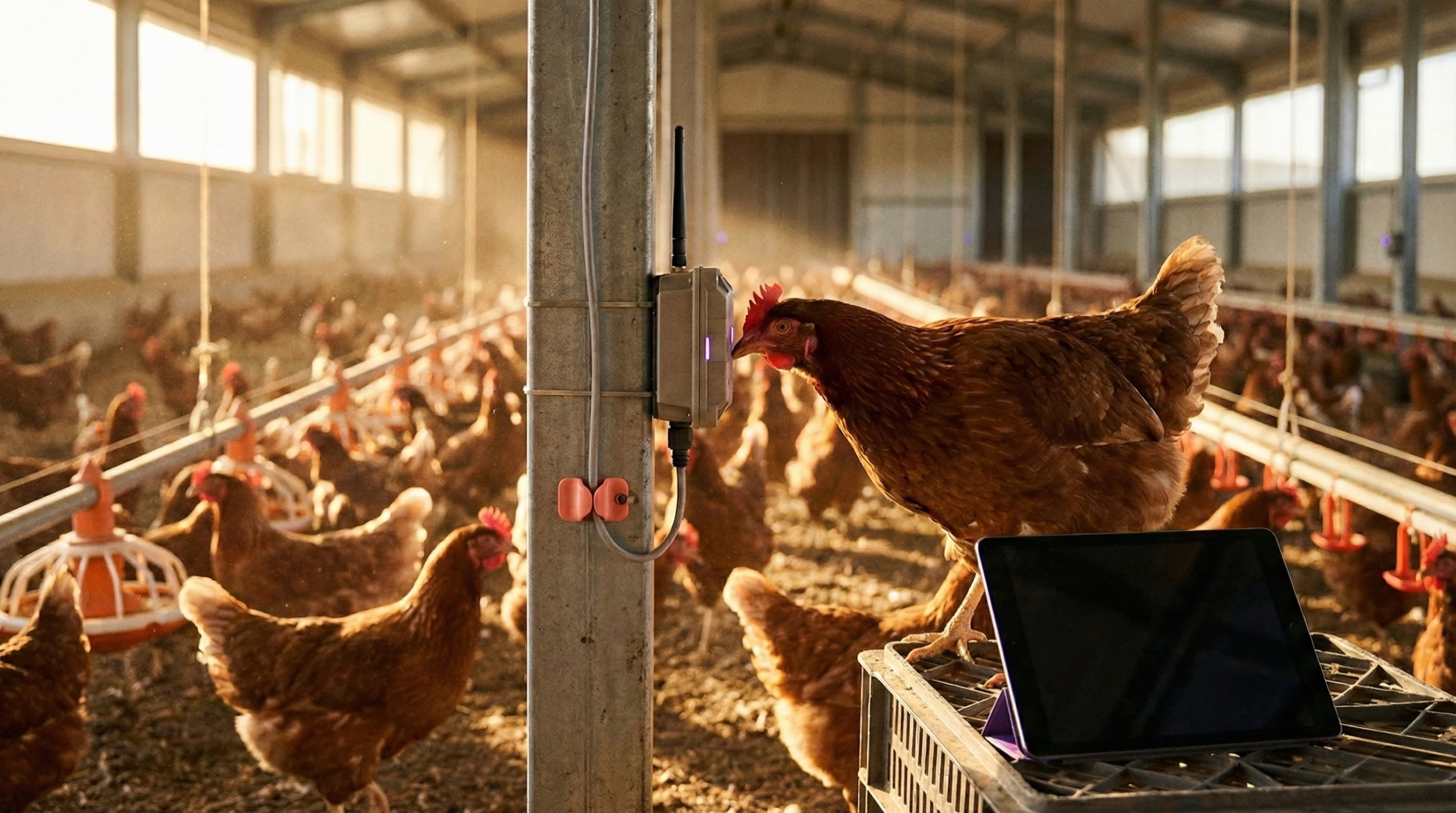
Commercial Poultry Operations
Large-scale poultry farms improve efficiency and bird welfare with comprehensive IoT monitoring.
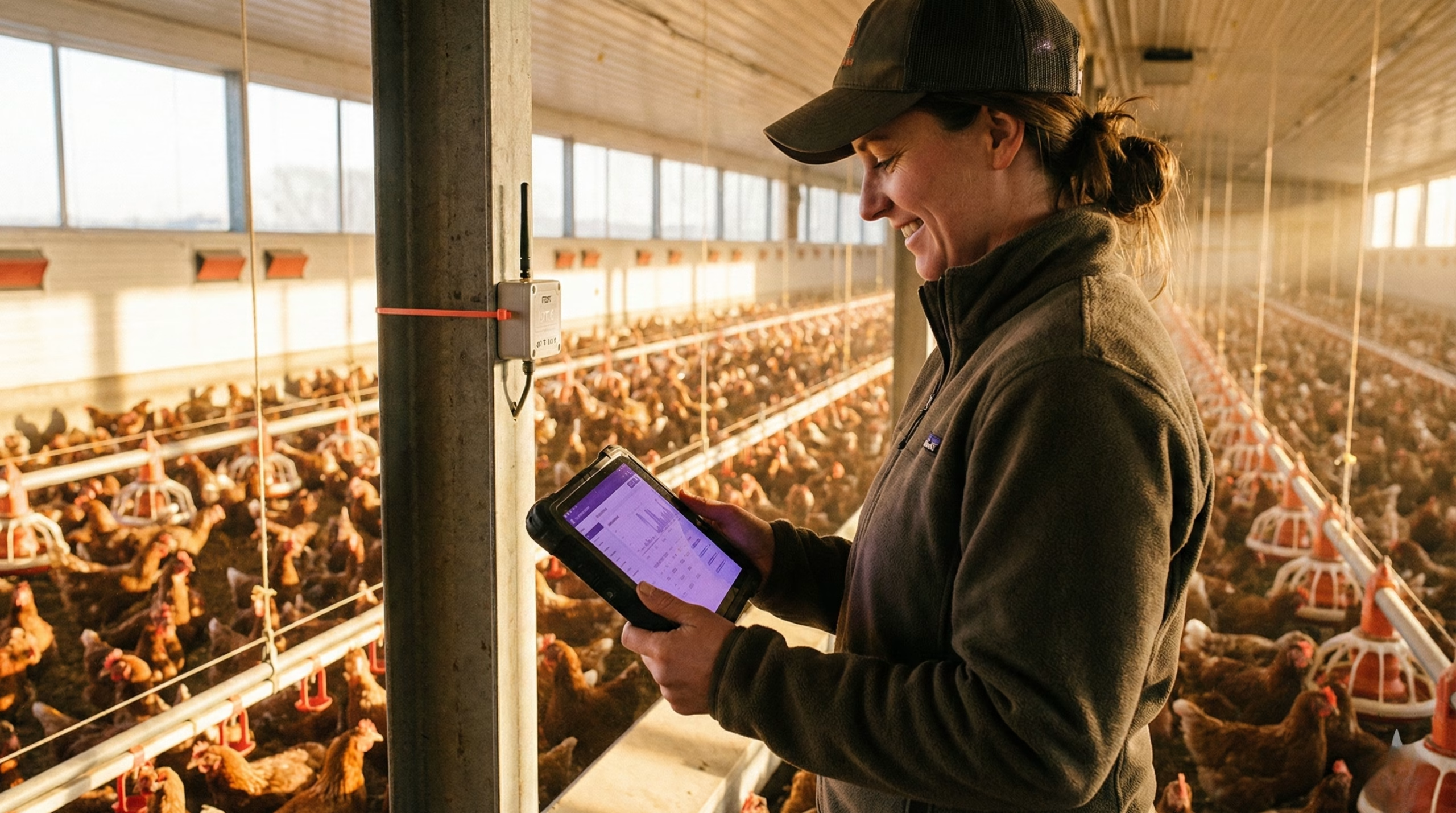
Egg Production Excellence
Layer farms optimize egg production through precise environmental control and health monitoring.
Complete Poultry Farming Solutions
Smart monitoring for healthier birds and better yields.
Climate Control
Automatic temperature, humidity, and ventilation management.
Performance Monitoring
Track growth rates, feed consumption, and bird health.
Health Alerts
Early detection of disease outbreaks and health issues.
Energy Management
Optimize heating, cooling, and lighting for efficiency.
Water Quality
Monitor and ensure optimal water quality for birds.
Environmental Monitoring
Track ammonia levels, dust, and air quality.
Regulations and certifications
What is required by law, what lenders and insurers ask for, and what is optional, with how continuous monitoring helps document it. The platform supports compliance; it does not certify it.
Required by law
Rules in force for the buildings and operators in their scope. Not meeting them can bring inspections, fines or loss of a licence.
- Required by lawSpainLaw
Royal Decree 348/2000 on the protection of animals on farms (Directive 98/58/EC)
Annex I, points 2, 3, 5 and 7
What it requires: Where welfare depends on artificial ventilation, an emergency system to renew the air and an alarm that warns of breakdown, checked regularly. Essential equipment inspected at least daily, air circulation, temperature, humidity and gases kept within harmless limits, and treatments and deaths recorded and kept three years.
Applies: In force for every livestock farm.
If it is not met: Animal welfare law (Ley 32/2007): up to 600 euros or a warning if minor, 601 to 6,000 if serious and 6,001 to 100,000 if very serious.
How monitoring helps: Temperature, humidity and gas sensors in the house with alarms by SMS, email or app, and a record of the daily check. It is a second alarm channel; the farm's own ventilation alarm and backup stay mandatory.
Official source - Required by lawSpainLaw
Royal Decree 692/2010 on the protection of broiler chickens
Annex I, point 9; Annex II, points 1.2 and 2
What it requires: Above 33 kg/m²: ammonia up to 20 ppm and CO2 up to 3,000 ppm at bird height; when it is above 30 °C outside in the shade, inside no more than 3 °C higher; when it is below 10 °C outside, average humidity over 48 hours no higher than 70%. Documentation of ventilation, heating, cooling and alarms, a log of their technical checks, and daily mortality per house kept three years.
Applies: In force; above 33 kg/m² the authority is notified 15 days in advance.
If it is not met: Fines under Law 32/2007, from up to 600 euros to 100,000.
How monitoring helps: Inside against outside temperature for the 3 °C rule, the 48-hour humidity average, the alarm and inspection log, and records exportable for three years.
Official source - Required by lawEuropean UnionLaw
Regulation (EU) 2016/429 (Animal Health Law)
Articles 10, 84, 102 and 112-113
What it requires: Operators are responsible for animal health and for biosecurity suited to species, production and risks, climatic conditions included, and keep records of animals, movements, mortality, biosecurity, treatments and tests for at least three years, on paper or electronically.
Applies: Applies since 21 April 2021.
How monitoring helps: Electronic, timestamped mortality and environment records that are easy to export for the authority.
Official source - Required by lawEuropean UnionLaw
Directive (EU) 2024/1785 (industrial emissions) and Implementing Decision (EU) 2026/2260 for pig and poultry farms
Annex Ia and articles 70a-70j; Decision 2026/2260, Annex, CU 19 and 20
What it requires: Pig farms from 350 livestock units and poultry farms from 280 (300 for laying hens) follow operating rules with ammonia limits per house, yearly ammonia monitoring, monthly control of air cleaning systems by continuously recording operating parameters or with alarms, and monitoring of water, electricity, fuel, animals, feed and manure. Cattle are not covered.
Applies: Transposition was due on 1 July 2026; Spain had not completed it. Farms comply from about 2030 to 2032, depending on size.
If it is not met: Penalties set by each Member State.
How monitoring helps: Continuous logging of the air scrubbers' operating parameters, their alarms and the water and energy meters produce those records. Ammonia emissions are calculated, not certified by us.
Official source
Required by lenders, insurers and investors
Not a legal duty for the owner, but it decides financing terms, insurance or the value of the asset.
- Required by lenders and insurersSpainGuideline
Agroseguro broiler insurance (line 406), 2026 plan
Product information document
What it requires: Heat stroke is an optional cover with limited periods. Losses caused by equipment not working (unless by fire or a weather cause), by cold, by lack of water or by poor water quality are excluded, and the farm must be registered in REGA and meet the Ministry's minimum technical conditions.
If it is not met: A loss with an excluded cause is not paid.
How monitoring helps: Timestamped temperature, humidity, equipment status and water flow help show what caused a loss. The policy does not require sensors and we claim no premium discount.
Official source
Reference sensors
Catalog devices we already integrate, with their decoder ready. For each installation we pick the model that fits best.
- Milesight EM300-THTemperature and humidity sensortemperature, humiditySee device

- Milesight AM307Indoor air quality sensortemperature, humidity, CO2, TVOC, pressure, motion (PIR), lightSee device
- Milesight EM300-DIPulse counterpulse countSee device
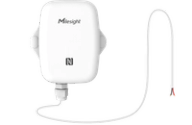
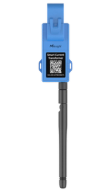
- Milesight CT103Current and energy metercurrentSee device
Poultry Farming IoT: Frequently Asked Questions
Everything you need to know about implementing IoT in poultry operations
Related Solutions
Explore more IoT solutions in this category


Transform your poultry operation
Healthier birds, better yields, and lower costs.