

Skip to main content

Food & Beverage Industry Revolutionized with IoT

When you're in the food and beverage industry, there's a lot at stake. Make quick decisions and optimize your processes to keep your business running smoothly.

Food & Beverage Industry
40%

Reduction in cold chain violations

30%

Faster response to quality issues

25%

Reduction in product waste

50%

Improvement in compliance tracking

35%

Optimization in logistics operations

20%

Increase in consumer satisfaction

Not optional

What the law and the lenders already ask of this kind of installation.

  • Required by lawRegulation (EC) 852/2004 on the hygiene of foodstuffsIn force for every food business after primary production.
  • Required by lawRegulation (EC) 178/2002 (General Food Law), articles 18 and 19In force since 2005 for every food and feed business.
  • Required by lawSpain Law 17/2011 on food safety and nutrition: infringements and penaltiesIn force.
  • Required by lenders and insurersIFS Food version 8Version 8 audits mandatory since 1 January 2024.
What each rule requires
01
Food safety compliance rate
99%

Food safety compliance rate

02
Reduction in operational costs
30%

Reduction in operational costs

03
Decrease in product waste
25%

Decrease in product waste

Cold Chain Excellence
01

Cold Chain Excellence

Food distributors monitor temperature across their fleet and warehouses to keep the cold chain compliant and reduce spoilage.

Freshness Guaranteed
02

Freshness Guaranteed

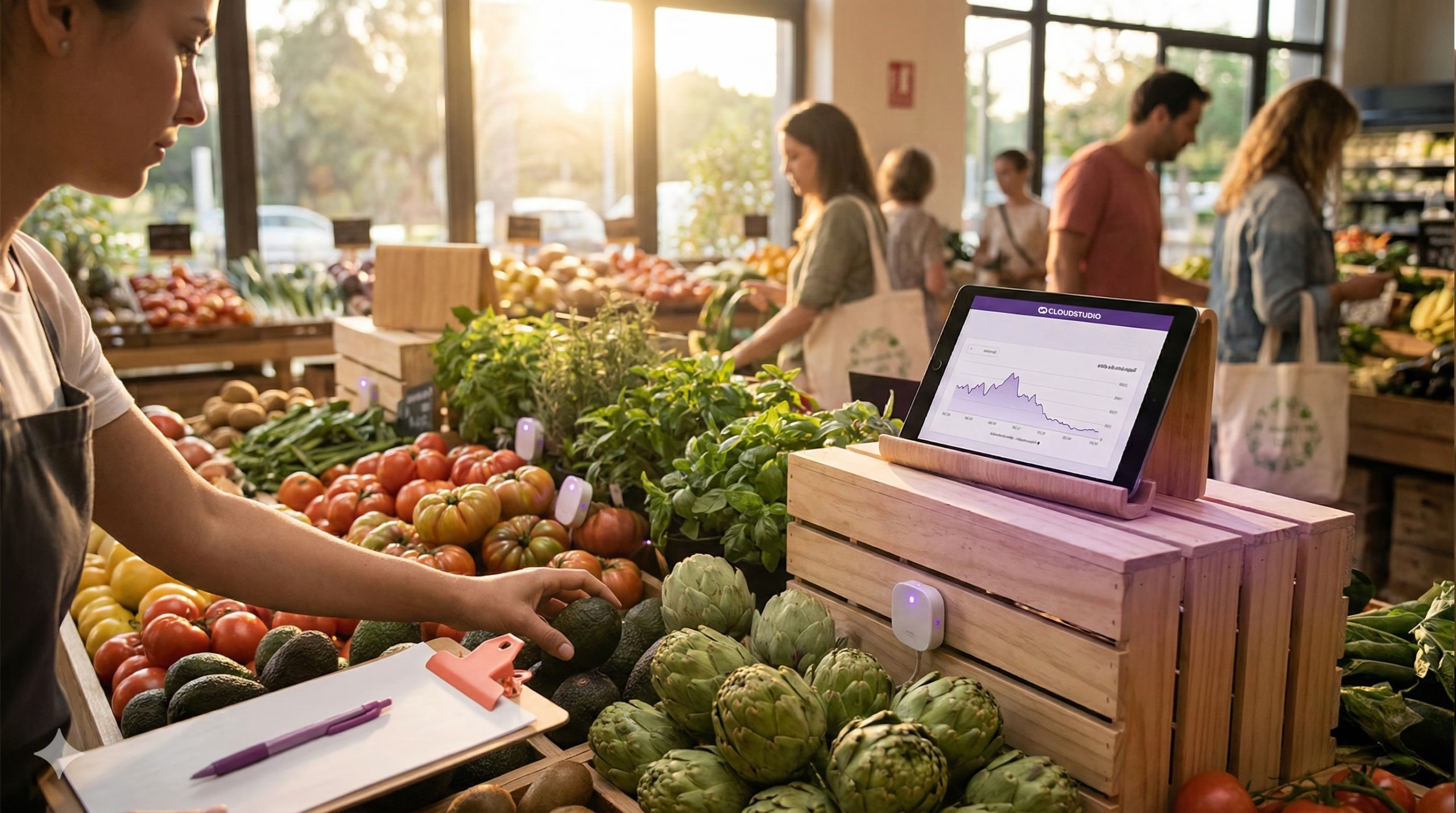
Restaurant chains monitor ingredient freshness in real time and can trigger orders automatically when stock levels reach their reorder points.

Complete Food & Beverage IoT Solutions

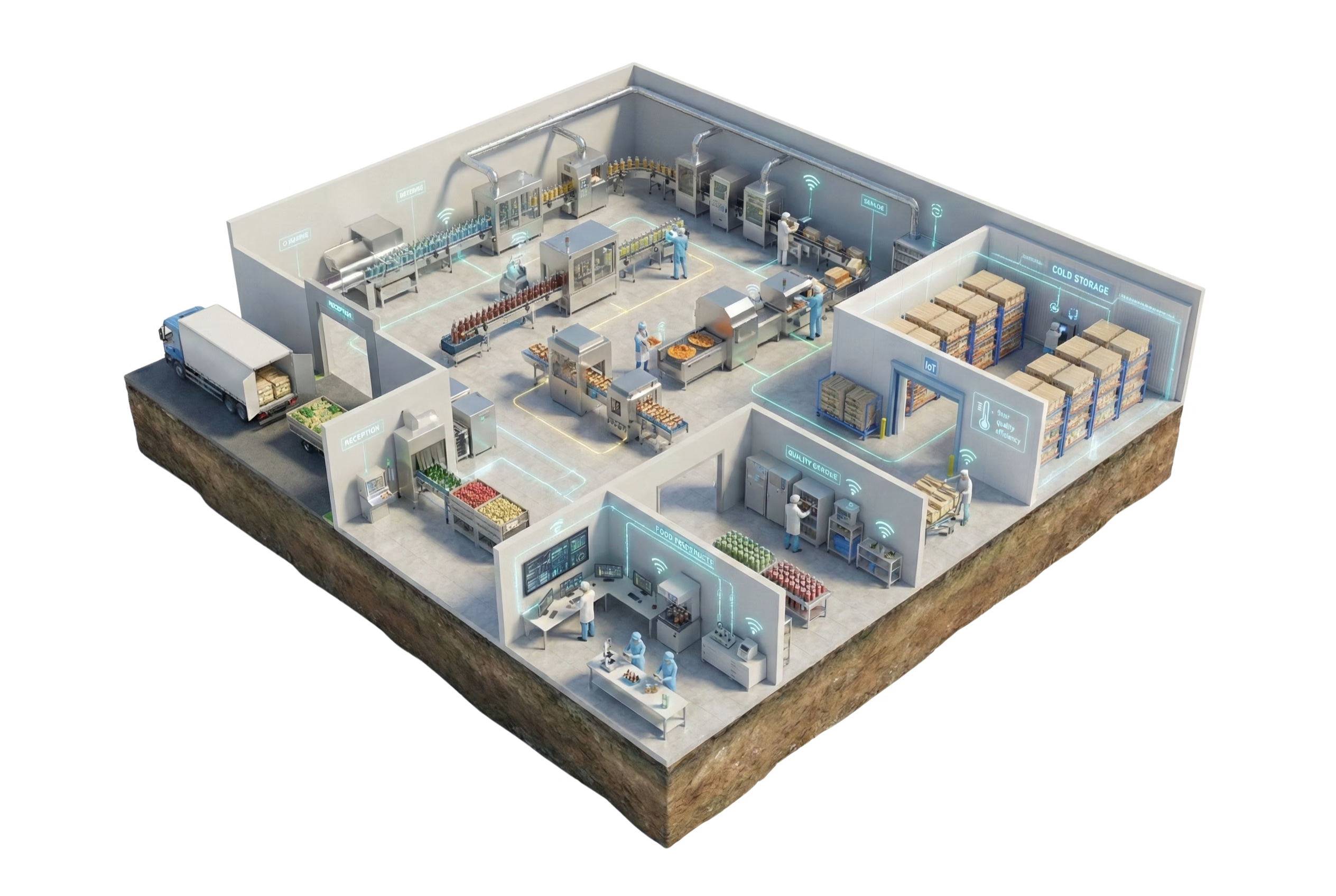
From farm to table, our platform ensures quality, safety, and efficiency throughout the entire food supply chain.

Cold Chain Monitoring

Real-time temperature and humidity tracking for perishable goods throughout the supply chain.

HACCP Compliance

Automated monitoring and documentation of critical control points for food safety standards.

Quality Analysis

Advanced analytics to detect quality issues before products reach consumers.

Fleet Tracking

GPS tracking for delivery vehicles.

Smart Alerts

Real-time notifications for deviations in temperature, humidity, or quality parameters.

Digital Documentation

Automated record-keeping for regulatory compliance and traceability.

Regulations and certifications

What is required by law, what lenders and insurers ask for, and what is optional, with how continuous monitoring helps document it. The platform supports compliance; it does not certify it.

Required by law

Rules in force for the buildings and operators in their scope. Not meeting them can bring inspections, fines or loss of a licence.

  • Required by lawEuropean UnionLaw

    Regulation (EC) 852/2004 on the hygiene of foodstuffs

    Article 5 (HACCP); Annex II, chapters IX, XI and XIa

    What it requires: Permanent HACCP-based procedures with effective monitoring at critical control points, corrective actions, verification and records kept for an appropriate period. The cold chain must not be interrupted, and heat treatment of sealed containers is checked regularly, which may be done with automatic devices. Since 2021 a food safety culture is also required.

    Applies: In force for every food business after primary production.

    If it is not met: Sanctions are national; in Spain, Law 17/2011 (see below).

    How monitoring helps: Continuous temperature records for cold rooms and stores, with alarms and a history to show the inspector. The HACCP plan, the critical limits and the corrective actions stay with the operator, and the sensors do not control any heat treatment.

    Official source
  • Required by lawEuropean UnionLaw

    Regulation (EC) 178/2002 (General Food Law), articles 18 and 19

    Article 18 (traceability) and article 19 (withdrawal)

    What it requires: Systems to identify suppliers and customers, available to the authority on request, and immediate withdrawal and notification when a food may be unsafe.

    Applies: In force since 2005 for every food and feed business.

    How monitoring helps: A dated history of storage conditions per room helps narrow down which lots a temperature excursion affected, so a withdrawal covers what it must and no more. Lot traceability itself lives in the plant's ERP or MES.

    Official source
  • Required by lawSpainLaw

    Spain Law 17/2011 on food safety and nutrition: infringements and penalties

    Articles 50 to 52

    What it requires: Deficiencies in records are a minor infringement. Missing required documents or records, missing essential traceability data, having no own-check system or not reporting a risk found in the own checks are serious.

    Applies: In force.

    If it is not met: Fines up to 5,000 euros for minor infringements, 5,001 to 20,000 for serious ones and 20,001 to 600,000 for very serious ones, which can also bring temporary closure for up to five years.

    How monitoring helps: Automatic records without gaps remove the most common finding, deficient records, and alarms catch a risk early. Reporting it to the authority is still the operator's duty.

    Official source
  • Required by lawSpainLaw

    Royal Decree 487/2022 on Legionella prevention

    Article 8 and Annex IV

    What it requires: A Legionella prevention plan for hot and cold water and cooling towers: daily temperature check of hot water storage (60 °C or more) and return (50 °C or more), weekly check of the cold water tank, and records preferably electronic, kept at least five years.

    Applies: In force since January 2023.

    If it is not met: Sanctioned under the General Public Health Act (Law 33/2011).

    How monitoring helps: Probes on the storage tanks and the return loop replace the daily manual reading, with alarms below 60 and 50 °C and more than five years of history. Sampling and disinfection are not covered.

    Official source
  • Required by lawUnited StatesLaw

    21 CFR Part 117, FSMA preventive controls for human food

    §117.40, §117.145, §117.165 and §117.315

    What it requires: A thermometer or temperature recorder in every freezer and cold store, written monitoring procedures, calibrated instruments, monitoring records reviewed within seven working days, records with actual values and date made at the time, and records kept at least two years. Refrigeration can be documented with exception records.

    Applies: In force for facilities registered with the FDA.

    If it is not met: Operating a facility out of compliance is a prohibited act under the FD&C Act.

    How monitoring helps: Automatic records with actual values and timestamps, exception alarms when refrigeration is lost and history reachable from the plant. The food safety plan, the qualified individual's review and calibration stay with the plant.

    Official source

Required by lenders, insurers and investors

Not a legal duty for the owner, but it decides financing terms, insurance or the value of the asset.

  • Required by lenders and insurersInternationalCertification

    IFS Food version 8

    2.3.9 (KO 2), 4.14.2, 4.18.1 (KO 7) and 5.4

    What it requires: Monitoring of each critical control point shown by records, other control measures monitored and recorded, storage conditions that match the product specifications and measuring devices identified and calibrated.

    Applies: Version 8 audits mandatory since 1 January 2024.

    If it is not met: Created by the German and French retail federations to audit their private-label suppliers. A KO requirement graded D means the certificate cannot be issued, and without it the retailer does not buy.

    How monitoring helps: Continuous, verifiable records of storage and of control measures, with the trace from alarm to corrective action. The sensors go into the plant's calibration programme.

    Official source
  • Required by lenders and insurersInternationalCertification

    BRCGS Global Standard for Food Safety, Issue 9

    Clauses 2.10, 3.11.1, 4.15.3 and 6.4

    What it requires: Temperature recording equipment with suitable alarms in every temperature-controlled store, or recorded manual checks typically at least every four hours; incident plans that consider loss of water, energy and refrigeration; and calibration traceable to a recognised standard.

    If it is not met: Recognised by leading retailers and brands worldwide; without the certificate many of them do not list the supplier.

    How monitoring helps: Clause 4.15.3 describes this kind of system: recording with alarms, which replaces the four-hourly rounds. Energy meters and leak sensors give early warning for the incident plan.

    Official source
  • Required by lenders and insurersInternationalCertification

    FSSC 22000 (ISO 22000:2018)

    Additional requirements, 2.5.7 environmental monitoring

    What it requires: A food safety management system built on ISO 22000 and prerequisite programmes, with a risk-based environmental monitoring programme for pathogens and indicator organisms, trend analysis and a yearly review.

    Applies: Version 7 published in May 2026; upgrade audits from 1 May 2027.

    If it is not met: Recognised by GFSI, so retailers accept it as an alternative to IFS or BRCGS.

    How monitoring helps: Environmental monitoring here means microbiological sampling, which sensors do not do. They support the prerequisite programmes: temperature and humidity trends per room and records of the measuring equipment.

    Official source

Monitoring in food plants: the records HACCP, IFS and BRCGS ask for, without paper rounds

A food plant lives from two documents: the HACCP plan the inspector checks and the IFS, BRCGS or FSSC certificate the retailer asks for before buying. Both are judged on records: temperatures taken on time, alarms answered, corrective actions written down. This guide sets out what the law and the certification schemes ask for, where automatic monitoring answers it and where it does not, and how to replace manual rounds without touching process control.

What the law asks and what the retailer asks

Regulation (EC) 852/2004 requires HACCP-based procedures with effective monitoring at critical control points, corrective actions and records, and a cold chain that is never interrupted. In Spain, Law 17/2011 makes deficient records a minor infringement (up to 5,000 euros) and missing records, missing traceability data or having no own-check system a serious one (5,001 to 20,000 euros); very serious cases reach 600,000 euros and closure for up to five years.

The retailer goes further. IFS Food, created by the German and French retail federations for their private-label suppliers, makes the monitoring of each critical control point a knock-out requirement: graded D, there is no certificate. BRCGS clause 4.15.3 asks for temperature recording with alarms in every temperature-controlled store, or manual checks at least every four hours. In the United States, FSMA requires a thermometer or recorder in every cold store and records kept two years.

RuleWho enforces itWhat it asks to record
Regulation (EC) 852/2004Health authorityMonitoring at critical control points, corrective actions
Law 17/2011Health authority (Spain)Own checks and their records, traceability
Royal Decree 487/2022Health authority (Spain)Hot water at 60/50 °C daily, records for five years
IFS Food 8 / BRCGS 9 / FSSC 22000Retailers and brand ownersRecords of every critical point, storage with alarms, calibration
21 CFR Part 117 (FSMA)FDAActual values with date, review in seven days, two years kept

Why a missing record is expensive

The EU Alert and Cooperation Network received 10,490 notifications in 2025, 11% more than in 2024. In Spain, AESAN's alert network handled 856 notifications in 2024, 397 of them alerts, with Salmonella and Listeria monocytogenes leading the bacterial ones. According to EFSA and ECDC, about seven in ten people infected with Listeria need hospital care.

When something goes wrong, the dated history decides how far the problem reaches: which room, which hours, which lots. Without it, the withdrawal covers everything that might have been affected.

What to measure in the plant, and what not

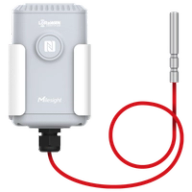
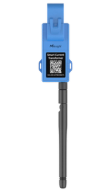
  • Cold rooms and freezer stores: Air temperature with a probe such as the Milesight EM500-PT100, plus door contacts. Sensors that store and forward their readings fill the gaps after a network outage.
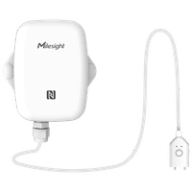
  • Dry stores and packaging: Temperature and humidity against the product specification with a sensor such as the Milesight EM300-TH.
  • Hot and cold water for Legionella: Immersion or well probes on the storage tanks and the return loop for the daily 60/50 °C check. Clamp-on probes measure the pipe, not the water, and the technical lead has to validate them.
  • Refrigeration plant and leaks: Compressor current with a clamp such as the Milesight CT103 and leak sensors such as the Milesight EM300-SLD give early warning for the incident plan BRCGS asks for.

What wireless sensors do not do: pasteurisation, retorts and CIP need readings in seconds and keep their certified recorders and PLCs; the gateway can archive that data as a second record. Product core temperature needs an inserted probe and your procedure, and environmental monitoring for pathogens is laboratory sampling.

How to plan a pilot

  • 1. Start with the next audit's weak point: The store with the most manual readings, the last finding or the room that fails in summer.
  • 2. Write the limits of your HACCP plan into the alarms: Each alarm should name who acts and how the corrective action is recorded.
  • 3. Put the sensors in the calibration programme: IFS 5.4, BRCGS 6.4 and FSMA ask for it; without it the record is weaker in an audit.
  • 4. Show the auditor the history: Then extend to the rest of the stores and plants with the same rules.

What to ask a provider

  • What happens to the readings when the network fails?: A record with gaps is a finding. Ask whether the sensors store and resend.
  • Are the sensors certified to EN 12830?: Regulation (EC) 37/2005 asks for it in quick-frozen food; check model by model.
  • How long is the history kept?: Five years for Legionella, two for FSMA, at least one for quick-frozen food.
  • Does it say it certifies compliance?: It should not. It produces the records; the HACCP team, the auditor and the authority decide.

Cloud Studio IoT runs in AWS (Frankfurt for Europe) or on your own servers, and under your brand if you are an integrator. Tell us about your plant.
Sources

  1. Regulation (EC) 852/2004 on food hygiene
  2. Law 17/2011 on food safety (BOE)
  3. Royal Decree 487/2022 on Legionella (BOE)
  4. IFS Food version 8
  5. 21 CFR Part 117 (eCFR)
  6. European Commission, ACN annual report 2025
  7. AESAN, SCIRI annual report 2024
  8. EFSA, serious Listeria infections rising in Europe

Food & Beverage IoT: Frequently Asked Questions

Everything you need to know about implementing IoT in food safety and supply chain

Get Started

Transform your food supply chain today

Ensure food safety, reduce waste, and optimize operations with Cloud Studio IoT.