Use cases
Precision agriculture
Soil sensing, leaf wetness and microclimate, with zone-based automated irrigation for extensive crops, greenhouses and orchards.
Precision agriculture
Precision agriculturePTermPrecision agriculturePrecision agriculture uses IoT sensors, GPS and data to optimize irrigation, fertilization and harvesting by zone, increasing yield and efficiency.View profile means irrigating, fertilising and treating by zone using what the field measures, not the average of the plot. It takes three pieces: sensors that survive outdoors, a network that reaches them, and a platform where the reading turns into an irrigation command or an alert.
What gets measured
- Soil: moisture and temperature at several depths, plus electrical conductivity. This is the reading that decides irrigation.
- Local weather: rain, temperature, relative humidity, wind and radiation. The station on the farm beats the regional forecast.
- Plant: leaf wetness and leaf temperature, which feed disease risk models.
- Water: flow, pressure and reservoir or tank level. Flow that does not match the schedule is usually a leak.
- Equipment: pump, valve and filter status, with accumulated running hours.
How the data gets out of the field
In the field the real choice is between LoRaWAN ProtocolLoRaWANOpen long-range, low-power LPWANView profile and cellular. With LoRaWAN you install your own gateway and cover kilometres with no per-sensor bill, in exchange for maintaining the network. With NB-IoT you deploy nothing, but you depend on the operator's coverage at the exact spot where the sensor goes, which in rural areas is worth measuring before you buy. Where there is mains power and you need data more often, 4G is the simple answer.
From reading to irrigation
The automation that works is boring: a moisture threshold per zone, a time window, a cut-off on rain or wind, and an alert when flow leaves the expected range. On top of that the platform opens and closes valves, records what was irrigated and keeps the history so seasons can be compared.
The water savings quoted in the sector, 20 to 40% in extensive crops, are industry estimates. The number for your own farm comes from comparing your history before and after, not from a brochure.
What to check before scaling up
- Coverage measured at the sensor, not in the nearest town.
- Power: solar panel and battery sized for December, not for August.
- Soil sensor calibration for your soil type. Without it, the threshold means nothing.
- Maintenance: tractors, animals and vandalism take out more sensors than electronics failures do.
- Data ownership: who can export it, in what format, and what happens if you change vendor.
The background guide is What smart agriculture is. The product version, with dashboards and alarms already built, is in Smart Agriculture.
Related protocols

Industries
Related articles
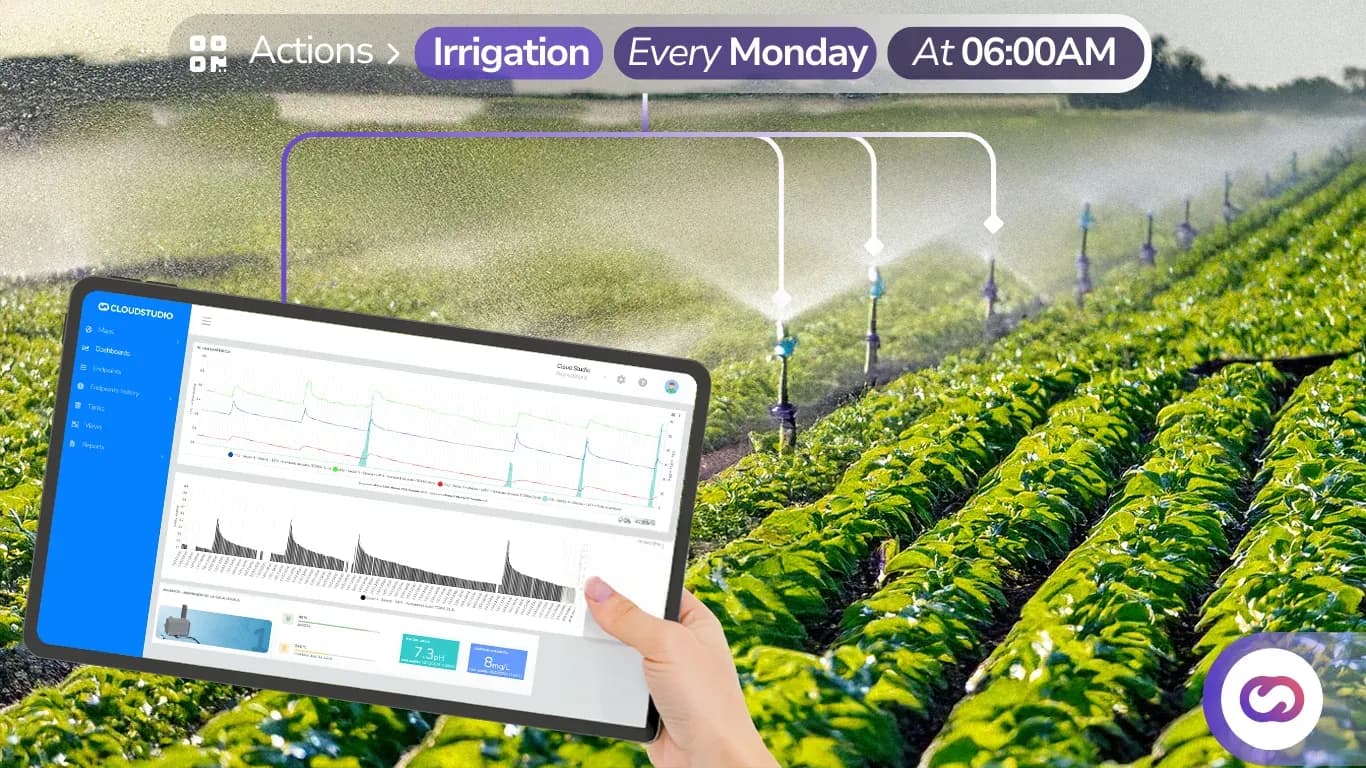
IoT Smart Farming: A Practical Guide to Smart Agriculture
How IoT smart farming works: the sensors, GPS, and imagery behind precision agriculture, LoRaWAN vs cellular vs satellite, and how to run a first pilot.
Sep 22, 2026

AI and IoT: Why Artificial Intelligence Needs the Internet of Things to Have Real Impact
Artificial intelligence without AI and IoT combined is like a brain without a nervous system: intelligent, but blind. It can imagine. It can assume. It can... hallucinate. But it cannot feel what is happening in the real world. This is not a casual metaphor. It is the reality fac
Sep 20, 2026

IoT Sensors: Types, Protocols and Applications in 2026
IoT sensors convert physical-world measurements — temperature, gases, vibration, light, position — into continuous, actionable, scalable digital data. This guid
Jul 9, 2026

World Internet Day 2026: From ARPANET to the Future of the Internet of Things
It was 10:30 PM on October 29, 1969, at Leonard Kleinrock's laboratory at UCLA. Graduate student Charley Kline began typing "login" from a computer connected for the first time to another machine more than 500 kilometers away, at the Stanford Research Institute. After the letter
Apr 17, 2026

IoT in the Next 15 Years: Security and AI Governance
The next fifteen years will witness a profound transformation driven by the convergence of Artificial Intelligence (AI) and the Internet of Things (IoT). This integration, envisioned by experts like Gerald Santucci, promises advancements across various sectors but also presents s
Apr 8, 2026
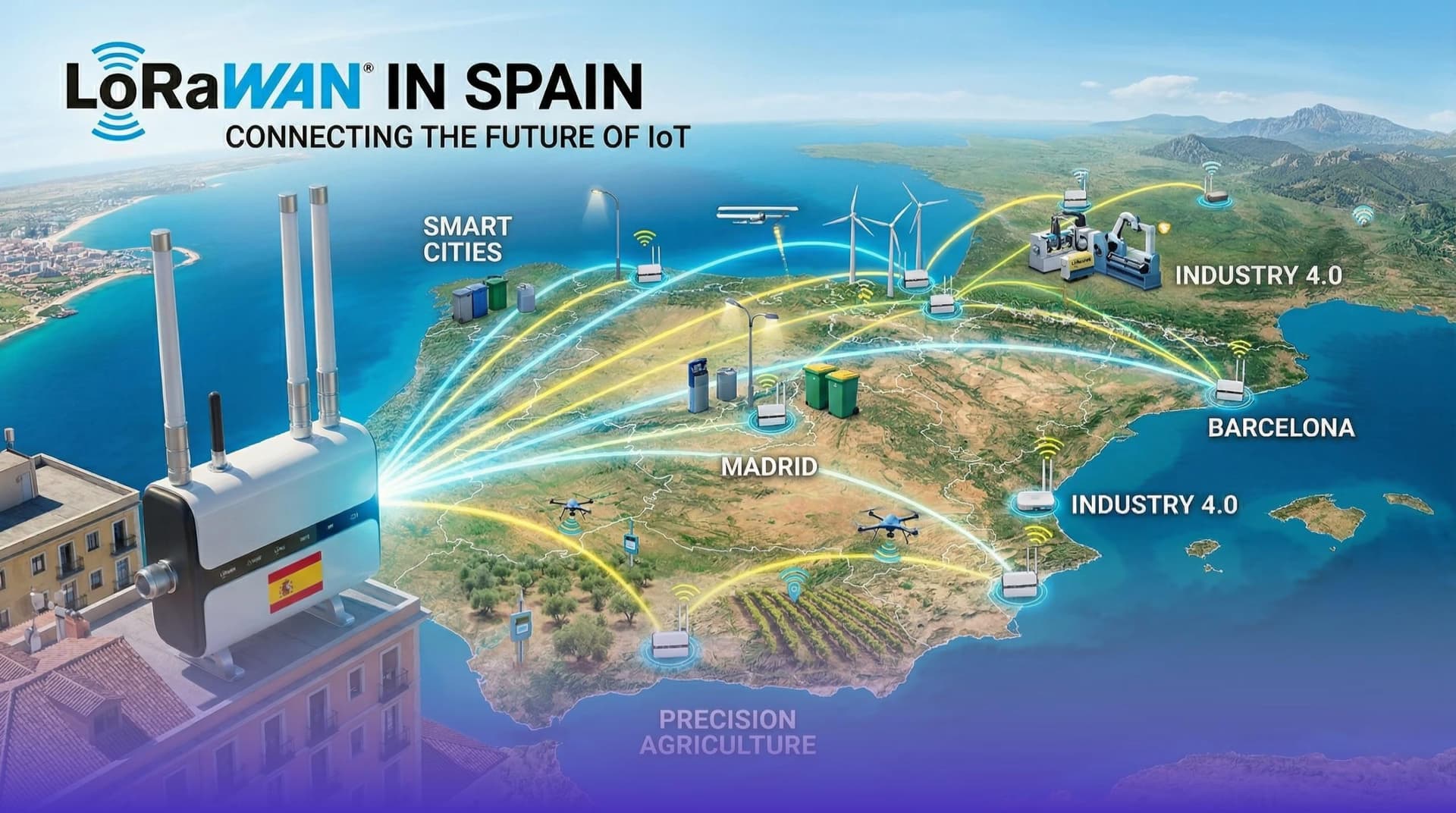
LoRaWAN in Spain: Industrial IoT Deployment Guide 2026
Considering Spain for your next LoRaWAN gateway procurement? While the European market offers robust options, navigating local distributors, manufacturers, and
Mar 30, 2026