Protocols

NB-IoT
3GPP-standardized cellular LPWAN — carrier coverage
Official spec ↗NB-IoT
The question every IoTITermIoT (Internet of Things)The IoT (Internet of Things) is the network of physical objects with sensors, software and connectivity that collect and exchange data and act autonomously.View profile architect asks on reaching LPWANLTermLPWANLPWAN (Low-Power Wide-Area Network) is a category of long-range, low-power wireless networks for IoT. It includes LoRaWAN, NB-IoT and LTE-M.View profile is direct: LoRaWAN ProtocolLoRaWANOpen long-range, low-power LPWANView profile, or what NB-IoT is exactly and what it gives you over unlicensed spectrum. Licensed spectrum, the operator's network, coverage wherever that operator has rolled NB-IoT out, a real SLA and a recurring bill, against private LoRaWAN with no connectivity cost. This article is the starting point for making that decision with data. The full guide, with the decision criteria and the frequently asked questions, is in What NB-IoT is and when to use it.
Executive summary
- NB-IoT (Narrowband IoT) is a cellular LPWAN radio access technology specified by the 3GPP in Release 13 (June 2016) and evolved in R14, R15 and R16 (accessed: 2026-05).
- It occupies a 200 kHz channel (a single LTE resource block) and operates in the operator's licensed spectrum, on sub-1 GHz LTE bands (B1, B3, B8, B20, B28, among others).
- Maximum data rate: ~26 kbps downlink, ~20 kbps uplink (R13). Enough for periodic telemetry; not suitable for streaming.
- Battery life: 10+ years with periodic transmissions and PSM (Power Saving Mode) enabled. The modules draw under 10 µA in deep sleep.
- Coverage: improved indoor penetration via an MCL (Maximum Coupling Loss) of 164 dB, better than standard LTE (~140 dB) and comparable to LoRaWAN SF12.
- The GSMA has published deployment guides and keeps a Mobile IoT deployment map listing the NB-IoT networks live in each country.
- Don't use it when: you need fewer than 1 message/hour (LoRaWAN is cheaper), you operate in areas with no cellular coverage, you have zero connectivity budget, or you need high mobility with frequent handover.
What NB-IoT is and what it's for
NB-IoT is the cellular ecosystem's answer to the rise of unlicensed LPWAN networks. Before 2016, an IoT device that needed nationwide indoor coverage — a water meter in a building basement, an asset tracker in a shipping container — had two options: GPRS (expensive, high power draw, not designed for IoT) or LoRaWAN (private coverage, no SLA).
The 3GPP designed NB-IoT to cover that gap using the resources of the existing LTE network. Operators can enable NB-IoT on their LTE infrastructure through a software upgrade — they need no new spectrum and no new tower infrastructure.
NB-IoT is part of the LPWAN connectivity IoT ecosystem, alongside LoRaWAN and SigfoxSProtocolSigfoxUltra-narrowband LPWAN for tiny messagesView profile. You can see the full picture of IoT protocols at Plataforma IoT.
How NB-IoT works
Deployment modes
The operator can deploy NB-IoT in three ways:
| Mode | Description | Availability |
|---|---|---|
| **In-band** | Reuses an existing LTE resource block. Shares spectrum with LTE. | The most common |
| **Guard-band** | Uses the LTE block's guard band (200 kHz unused at the edges). | Less frequent |
| **Standalone** | Occupies its own 200 kHz channel (can reuse refarmed GSM 900/1800 spectrum). | In markets with active GSM |
In all three cases, the NB-IoT device sees exactly 200 kHz of bandwidth. The eNB (LTE antenna) adds NB-IoT support as just another scheduler resource.
PSM and eDRX: the key to battery life
The 10+ years of battery life don't come from the radio — they come from the power-saving modes standardized in 3GPP:
PSM (Power Saving Mode): the device negotiates an active time (T3324, e.g. 10 s) and a deep-sleep time (T3412, e.g. 12 hours) with the network. During sleep, the device is effectively off — the network can't reach it. Ideal for sensors with periodic reporting (a water meter that transmits daily).
eDRX (extended Discontinuous Reception): longer listening cycles than standard LTE DRX. The device "wakes up" every N seconds to check for pending messages from the server. It allows some bidirectional latency without continuous power draw.
PSM timeline:
|--Transmit--|--T3324 active--|----------------T3412 sleep (hours)----------------|--Transmit--|
             ↑ server can send during T3324
Network architecture
[NB-IoT device]
        ↓ (200 kHz radio)
[Operator's eNB / LTE base station]
        ↓ (S1-U / control plane CIoT optimization)
[EPC: MME, SGW, PGW]
        ↓ (IP / NIDD)
[IoT server / platform]
The data plane can be standard IP (UDP/CoAP ProtocolCoAPCoAP (RFC 7252) brings GET/POST/PUT/DELETE to devices with 8 KB of RAM over UDP. How Observe and DTLS work, and when to pick it over MQTT.View profile, MQTT
 ProtocolMQTTThe standard pub/sub protocol of IoTView profile over TCP) or NIDD (Non-IP Data Delivery), where data is carried directly over the signaling plane with no IP address — reducing overhead for small payloads.
Main frequency bands
NB-IoT operates on the same sub-1 GHz bands as LTE, which offer the best indoor penetration:
| Band | Frequency | Main regions |
|---|---|---|
| B8 | 900 MHz | Europe, Asia |
| B20 | 800 MHz | Europe |
| B28 | 700 MHz | Latin America, Oceania |
| B1 | 2100 MHz | Global (lower penetration) |
| B3 | 1800 MHz | Global |
In Spain, Movistar, Orange and Vodafone offer NB-IoT on bands B20 and B8 with nationwide coverage. Verify coverage by municipality on each operator's portals before designing.
Real-world use cases
NB-IoT stands out where guaranteed coverage, long battery life and low data volume come together:
| Sector | Concrete example | Why NB-IoT |
|---|---|---|
| **Smart metering** | Water, gas and electricity meters in Spain (Endesa, Iberdrola) | Daily reads, basements with poor coverage, 10+ years of battery |
| **Smart Cities** | Smart parking sensors in Madrid and Barcelona | The city is already covered by LTE; coverage under asphalt with 164 dB MCL |
| **Logistics and asset tracking** | Tracking containers in ports and warehouses | Nationwide coverage with no private infrastructure; [smart cities](/en/use-cases/smart-cities) as a key client |
| **Livestock farming** | Livestock collars in rural areas with B28 coverage | Range of kilometers; battery lasts the animal's lifetime |
| **Buildings** | CO₂, temperature and humidity monitors in offices | Installation with no construction work (battery), no corporate Wi-Fi |
| **Technical alarms** | Water and gas leak detectors in residential buildings | Sporadic event, latency under 10 s acceptable, basement coverage |
Asset tracking is one of the typical uses: equipment that moves little, reports a few times a day and needs coverage beyond your own network.
When NOT to use NB-IoT
Being direct about NB-IoT's limits saves money:
If message density is very low and you don't need an operator SLA, LoRaWAN is cheaper. A LoRaWAN node transmitting every 6 hours can cost nothing in connectivity on a network like The Things Network or Helium. NB-IoT has a monthly cost per SIM — irrelevant at scale, significant in pilots or projects with under 1,000 nodes.
Without cellular coverage, NB-IoT doesn't work. In remote rural areas of Spain, sub-1 GHz LTE coverage can fail where LoRaWAN with a private gateway does reach.
For high mobility (vehicles, drones, pedestrians on the move), LTE-M is better. NB-IoT doesn't support cell handover while moving — mobile devices lose their connection when crossing cells. LTE-MLProtocolLTE-MCellular IoT with mobility and voiceView profile (Cat-M1), also part of 3GPP Release 13, has handover and supports VoLTE, designed precisely for mobile trackers.
For frequent data (more than 1 message/minute), NB-IoT is costly. The radio duty cycle and the control-plane limitations make it inefficient for continuous polling. MQTT over LTE-M or conventional 4G is a better fit.
If you need latency under 1 second for real-time actuation, NB-IoT with PSM enabled isn't compatible — the device may be asleep for 12 hours.
NB-IoT vs LoRaWAN: when to choose each
| Criterion | NB-IoT | LoRaWAN |
|---|---|---|
| Spectrum | Licensed (operator) | Unlicensed (ISM 868/915 MHz) |
| Coverage | Operator's network (nationwide, SLA) | Own or public infrastructure (TTN, Helium) |
| Connectivity cost | Monthly SIM (~€1-5/device/year) | Zero (own network) or very low (TTN) |
| Indoor coverage | Excellent (164 dB MCL) | Good (157 dB SF12) |
| Data rate | ~20 kbps | 0.3-50 kbps (depends on SF) |
| Latency | Under 10 s (PSM active) to hours (PSM sleep) | 1-5 s (confirmed) |
| Battery life | 10+ years (PSM) | 5-10 years (ADR-optimized) |
| Maximum payload | ~1400 bytes (IP) | 51-222 bytes (depends on SF) |
| Mobility | Low (no handover) | Low-medium |
| Standard | 3GPP R13+ | LoRa Alliance TS001 |
| Module ecosystem | SIM7020, BC660K, BG77 | RAK3172, E5, LLCC68 |
The detailed comparison is in LoRaWAN vs NB-IoT. The LoRaWAN article covers the unlicensed technology in depth.
Getting started: an NB-IoT module with AT commands
The most widely used NB-IoT modules (Quectel BC660K, SIMCom SIM7020E, u-blox Companyu-bloxPositioning (GNSS) and cellular communication modulesView profile SARA-R410M) expose a UART interface with standard 3GPP AT commands plus vendor extensions.
1. Basic network connection
# Verify the module
AT
# OK

# Check the IMEI
AT+CGSN
# 357520080678555

# Set the operator's APN
AT+CGDCONT=1,"IP","iot.movistar.es"

# Activate the PDP context
AT+CGACT=1,1

# Verify the assigned IP
AT+CGPADDR=1
# +CGPADDR: 1,10.128.45.22
2. Send a UDP datagram (CoAP or raw payload)
# Open a UDP socket
AT+NSOCR="DGRAM",17,0,1
# 0 (socket ID)

# Send 4 bytes to the server on port 5683 (CoAP)
AT+NSOST=0,"93.184.216.34",5683,4,"41010000"

# Close the socket
AT+NSOCL=0
3. Enable PSM (maximum battery life)
# PSM: T3412=12 hours, T3324=10 seconds
# Timer value encoding per 3GPP TS 24.008
AT+CPSMS=1,,,,"00100110","00000001"

# Verify PSM status
AT+CPSMS?
# +CPSMS: 1,,,,"00100110","00000001"
After the transmission, the module enters PSM automatically when T3324 expires. Consumption drops from ~200 mA (TX) to under 10 µA.
Primary sources
- 3GPP — NB-IoT standardization complete — official 3GPP note (accessed: 2026-05)
- GSMA — NB-IoT Deployment Guide v2 — industrial deployment guide (accessed: 2026-05)
- 3GPP — NarrowBand IOT overview — 3GPP technical overview (accessed: 2026-05)
Frequently asked questions
Are NB-IoT and LTE-M the same thing?+
No, although both are cellular LPWANs from 3GPP Release 13. NB-IoT uses 200 kHz, doesn't support handover, and is meant for static, low-data devices. LTE-M (Cat-M1) uses 1.4 MHz, supports handover and voice (VoLTE), and is designed for mobile trackers or devices that need large OTA updates. NB-IoT is cheaper in both module and power; LTE-M is more flexible.
How much does an NB-IoT SIM cost in Spain?+
The IoT plans from Movistar, Orange and Vodafone start at €1-5/device/year for low data use (under 100 KB/month). Above 1,000 nodes, fleet contracts drop below €1/SIM/year. The GSMA publishes the NB-IoT Deployment Guide with cost benchmarks (accessed: 2026-05).
Does NB-IoT work inside buildings?+
Yes. Its 164 dB MCL is its main advantage over standard LTE. It works in the basements of residential buildings and inside industrial warehouses where ordinary LTE fails. That's why smart water meters in Spain use NB-IoT.
What happens if the operator doesn't have NB-IoT in my area?+
The device can't connect. Unlike LoRaWAN, where you can install your own gateway, NB-IoT depends 100% on the operator's infrastructure. Verify coverage before choosing the module — some dual NB-IoT/LTE-M modules fall back automatically.
Does NB-IoT support IPv6?+
Yes, although most current deployments assign private IPv4 with CGNAT. IPv6 is supported in the spec and some operators enable it. For applications using CoAP, the addressing layer is transparent — the module handles the assigned IP.
How many bytes can I send per NB-IoT message?+
With standard IP: the MTU of the operator's IP network (typically 1280-1500 bytes). With NIDD (Non-IP Data Delivery): the maximum is configurable by the operator, typically 1600 bytes per PDU. In practice, IoT payloads are 10-200 bytes — well below the limit.
Compatible devices
- Quectel BG95/BG96/BG770A, Nordic nRF9160, u-blox SARA-N3xx
Companies

Related articles

LoRaWAN Range: What to Expect in Real IoT Deployments
The LoRaWAN range on the datasheet, those 15 kilometers, is true and almost never yours, and the gap between those two numbers gets paid for in the field.
Oct 13, 2026

IoT Platform Cost: A Five-Year TCO Model for Integrators
IoT platform cost is rarely just the license line on a quote: over five years, data, connectivity, and operations can add up to more than the software.
Sep 24, 2026
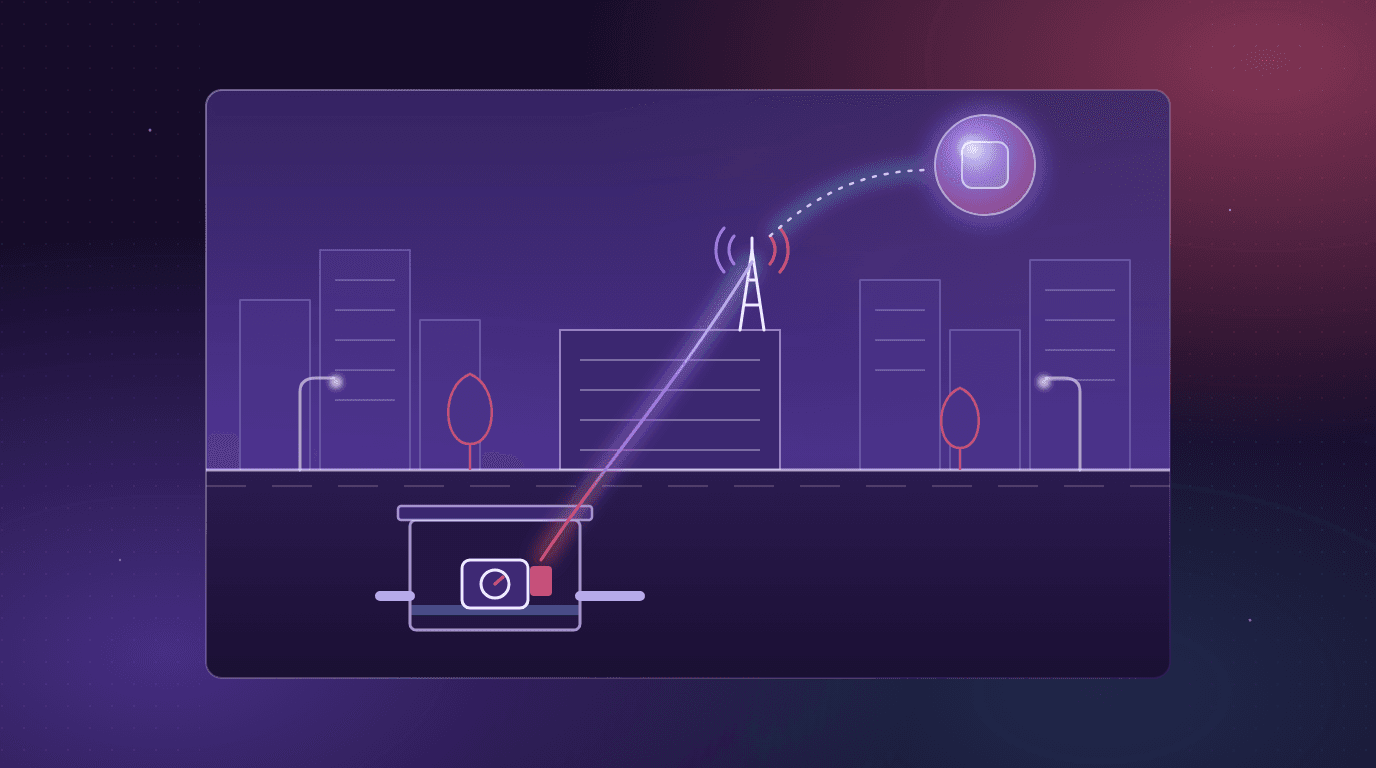
What Is NB-IoT? How Narrowband IoT Works and When to Use It
NB-IoT (narrowband IoT) explained: how it works, PSM and eDRX, NB-IoT vs LTE-M vs LoRaWAN vs Sigfox, operators in the US, Mexico and Spain, and when to use it.
Sep 22, 2026
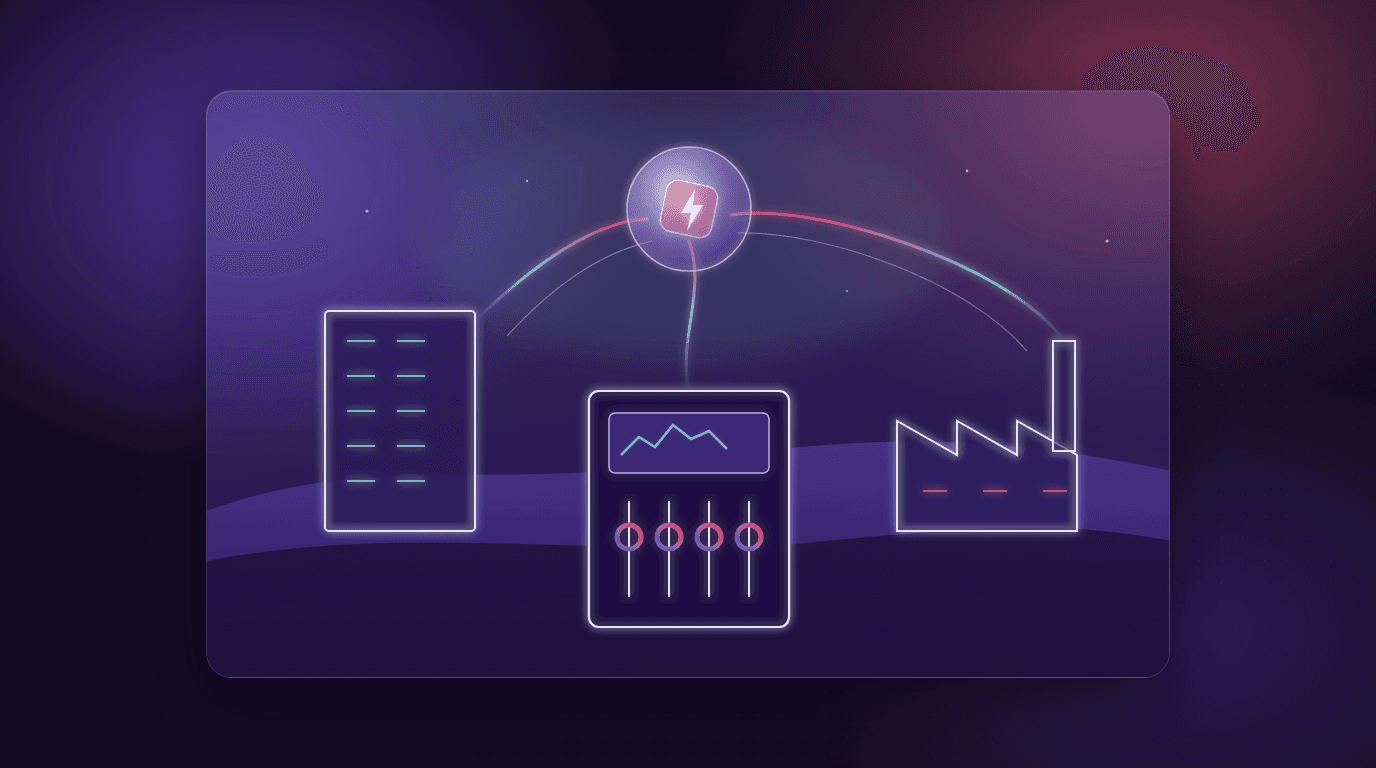
Energy Monitoring System: How It Works and Submetering
What an energy monitoring system is, its parts (meters, submeters, CT clamps, Modbus, gateways), what submetering is, key metrics, and how to start one.
Sep 22, 2026
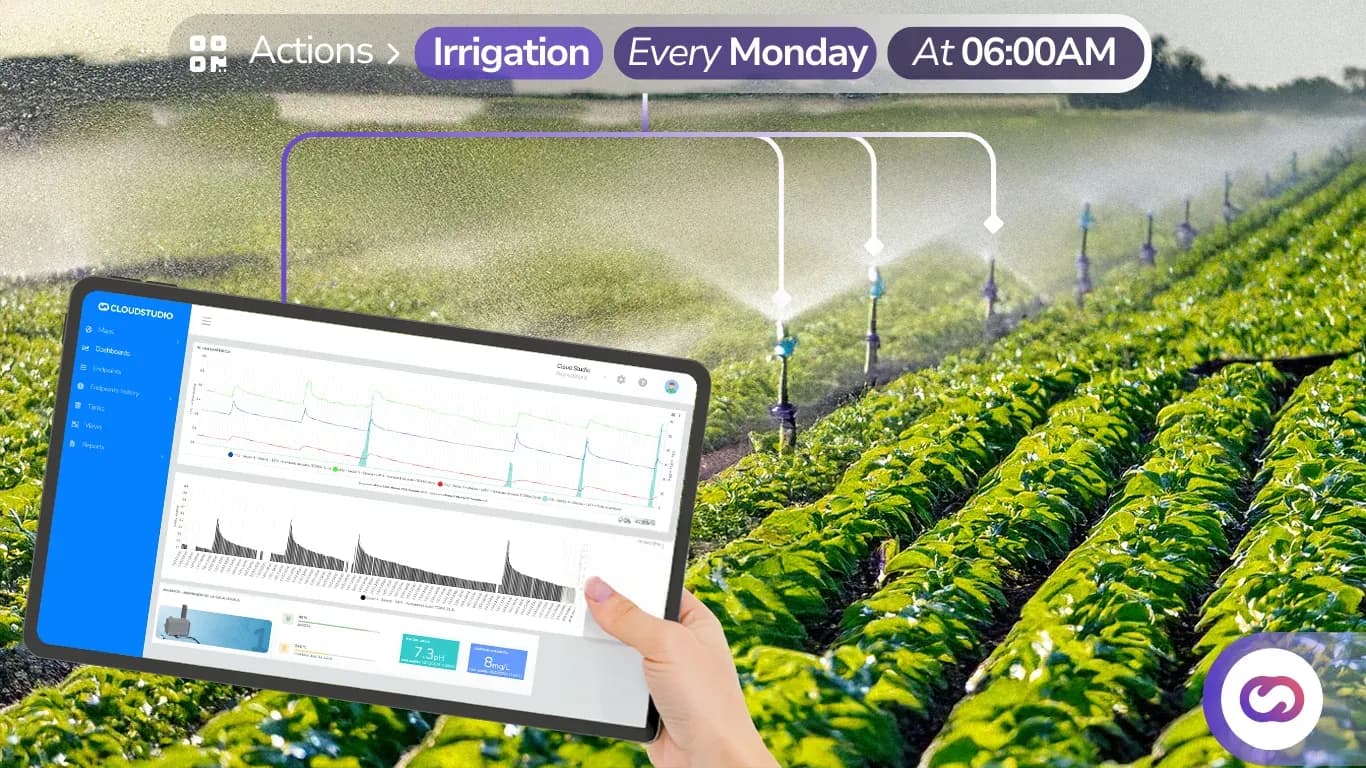
IoT Smart Farming: A Practical Guide to Smart Agriculture
How IoT smart farming works: the sensors, GPS, and imagery behind precision agriculture, LoRaWAN vs cellular vs satellite, and how to run a first pilot.
Sep 22, 2026

What Is IoT (Internet of Things)? How It Works and Examples
What IoT (the Internet of Things) means, how its four layers work, where the term came from, real examples by industry, IoT vs IIoT, the risks, and how a company starts an IoT project.
Sep 22, 2026