

Skip to main content

Monitor Tanks Smarter with IoT Technology

Ensure inventory accuracy, prevent overflows, and optimize operations with real-time tank monitoring.

Monitor Tanks Smarter with
150,000+

Devices connected to the platform

LoRaWAN

Also MQTT and HTTP, and Modbus or OPC UA through a software gateway on the edge

5

Alarm channels: email, SMS, WhatsApp, voice call and push

99.9%

Platform availability, excluding scheduled maintenance

2

Ways to run it: our cloud on AWS or your own servers

35+

Hardware and integration partners

Not optional

What the law and the lenders already ask of this kind of installation.

  • Required by lawITC MI-IP 03 (Real Decreto 1427/1997)
  • Required by lawReal Decreto 656/2017, ITC MIE APQ-1, art. 9.5
  • Required by law40 CFR Part 280, Subpart D (UST release detection)
  • Required by lawReal Decreto 656/2017, ITC MIE APQ-6 and APQ-7
What each rule requires
01
150,000+

Connected devices

02
5

Alarm channels

03
99.9%

Platform availability

Fuel Storage Management
01

Fuel Storage Management

Fuel distributors optimize inventory and prevent losses with tank monitoring.

Chemical Plant Tanks
02

Chemical Plant Tanks

Chemical facilities ensure safe storage and prevent environmental incidents.

Farms: water troughs, milk tanks and feed silos
03

Farms: water troughs, milk tanks and feed silos

Livestock farms get an alert when a trough runs dry, the milk tank warms up or a feed silo is about to run out.

Complete Tank Monitoring Solutions

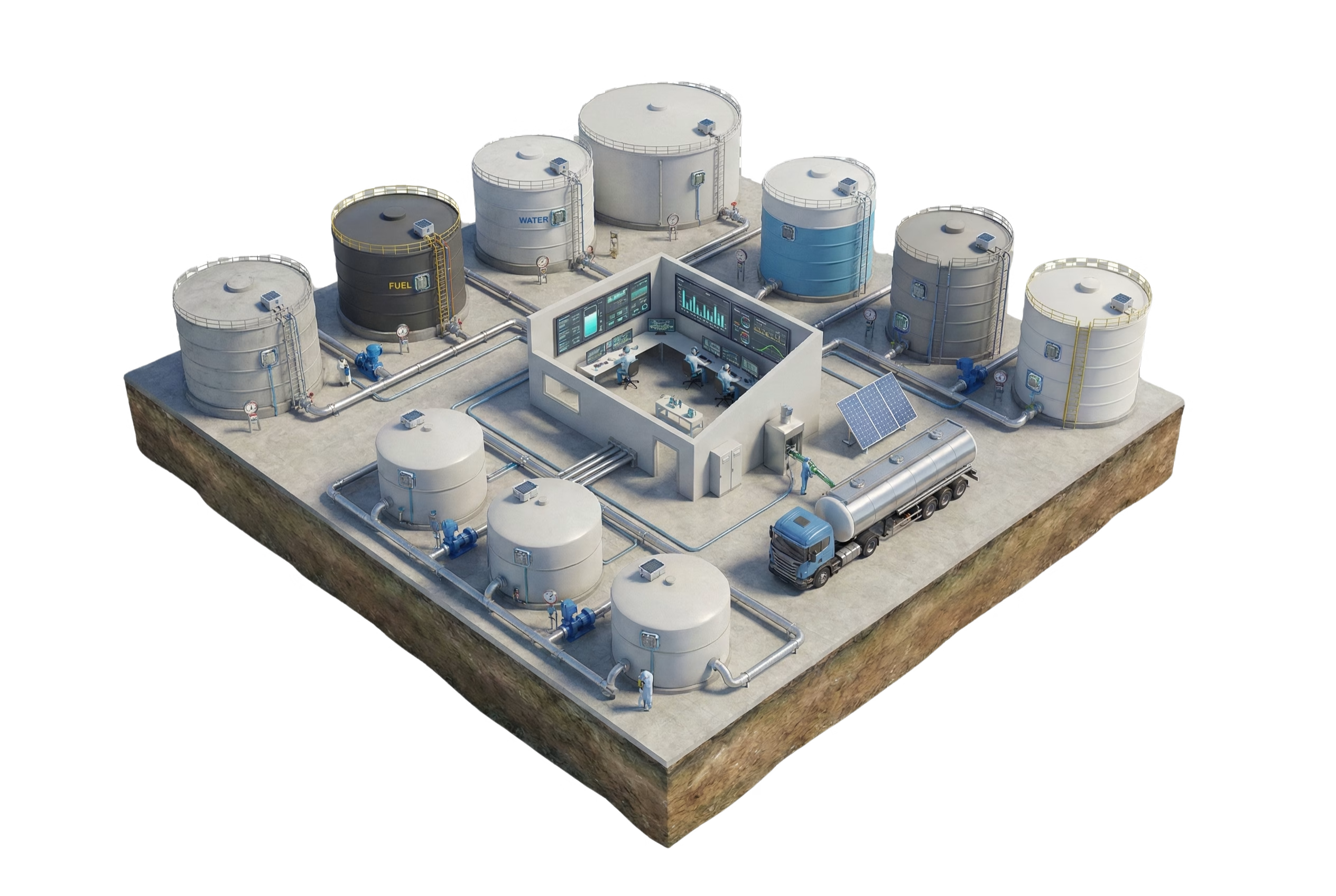
Real-time monitoring for fuel, water, chemical, and industrial tanks.

Level Monitoring

Real-time tank level tracking with ultrasonic and radar sensors.

Temperature Monitoring

Track temperature for quality control and safety.

Leak Detection

Early detection of leaks and integrity issues.

Inventory Analytics

Usage patterns and forecasting insights.

Smart Alerts

Customizable alerts for level thresholds and anomalies.

Multi-Site Management

Monitor tanks across multiple locations from one platform.

Regulations and certifications

What is required by law, what lenders and insurers ask for, and what is optional, with how continuous monitoring helps document it. The platform supports compliance; it does not certify it.

Required by law

Rules in force for the buildings and operators in their scope. Not meeting them can bring inspections, fines or loss of a licence.

  • Required by lawSpainLaw

    ITC MI-IP 03 (Real Decreto 1427/1997)

    What it requires: Buried tanks for own-use petroleum storage must have a leak detection system, such as a sealed pit with dip tube or double wall with leak detection; for a tank in a sealed pit with dip tube, staff must check at least weekly that there is no product in the dip tube.

    How monitoring helps: Level readings and leak-sensor alarms with timestamps can complement the required detection system and keep a record of checks, while the detection system itself must be one the ITC accepts or the regional authority authorizes.

    Official source
  • Required by lawSpainLaw

    Real Decreto 656/2017, ITC MIE APQ-1, art. 9.5

    What it requires: Storage tanks for flammable and combustible liquids within the scope of APQ-1 must have devices to prevent overflow from overfilling, and any overflow must be led to a safe place if those devices fail.

    How monitoring helps: Continuous level monitoring with high-level alarms adds a remote warning before filling reaches the limit, alongside the anti-overflow devices the ITC requires.

    Official source
  • Required by lawSpainLaw

    Real Decreto 656/2017, ITC MIE APQ-6 and APQ-7

    What it requires: For tanks of corrosive (APQ-6) and toxic (APQ-7) liquids, overfilling must be prevented by two independent safety elements, for example level indicators and an independent high-level alarm.

    How monitoring helps: A remote level sensor with alarms and history can act as level indication and record filling operations, while the second independent element remains a separate device on the tank.

    Official source
  • Required by lawUnited StatesLaw

    40 CFR Part 280, Subpart D (UST release detection)

    What it requires: Owners and operators of regulated underground storage tanks must provide release detection for tanks and piping, typically monitoring tanks at least every 30 days, and keep records demonstrating compliance.

    How monitoring helps: Daily level readings and inventory history stored automatically help prepare the inventory and monitoring records, without replacing the release detection method the rule requires.

    Official source
  • Required by lawUnited StatesLaw

    40 CFR 112.8(c)(8) (SPCC)

    What it requires: Onshore facilities subject to the SPCC rule must engineer each bulk storage container installation to avoid discharges with at least one listed device, such as a high liquid level alarm or a fast response level system, and regularly test liquid level sensing devices.

    How monitoring helps: Remote level readings with high-level alarms sent to an attended station, plus a log of alarms and tests, can support the overfill measures described in the facility's SPCC plan.

    Official source

Tanks on livestock farms: troughs, milk tanks and feed silos

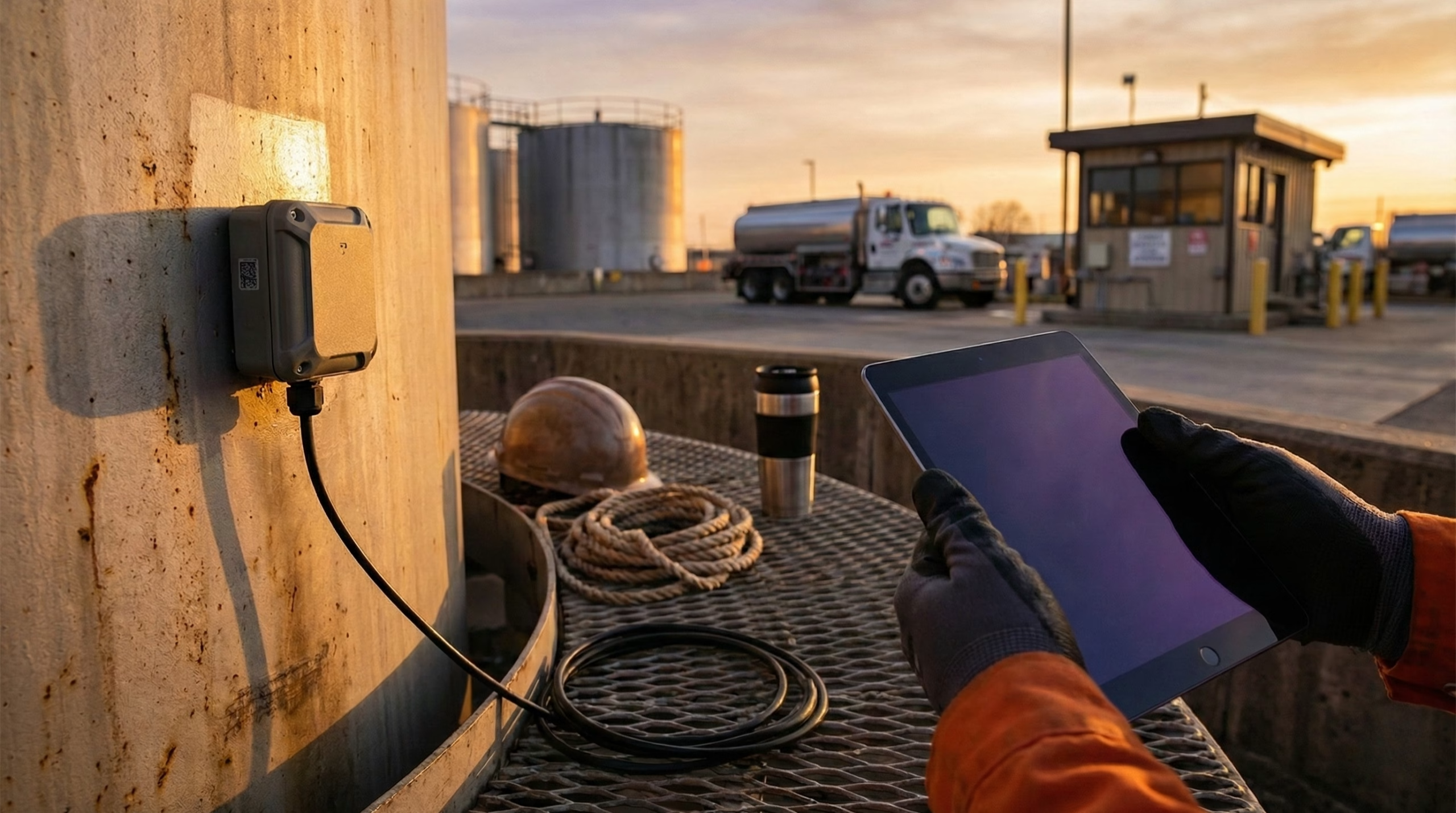
On a livestock farm, three tanks decide a lot of the day: the water troughs, the milk cooling tank and the feed silos. Each one fails in its own way, and each one can be watched with a battery sensor and an alert on the phone.

What to watch in each one

  • Water troughs: a level sensor in the trough or its supply tank warns when the water drops, because a float valve stuck or a pipe froze, before the animals go without.
  • Milk tank: a temperature probe in the tank shows whether the milk cools in time after each milking and stays cold until collection, with an alert if the cooling unit stops.
  • Feed silos: a level sensor on the silo roof shows how much feed is left and when to order, so the next delivery is not an emergency.

Specialists and a single platform

There are good specialists for each tank: silo sensors from brands such as Rotecna, Insylo or BinMaster, milk tank monitors from the tank makers and companies such as DataLact, and trough sensors from livestock technology firms. Our approach puts the three on one platform with LoRaWAN sensors from our catalog, one gateway for the farm and alerts by email, SMS, WhatsApp, voice call or push.

Farms far from any network can use a gateway with its own 4G connection. Cooperatives, feed suppliers and integrators can offer it to their members or clients under their own brand.


Tank Monitoring IoT: Frequently Asked Questions

Everything you need to know about implementing IoT for tank monitoring

Get Started

Optimize your tank operations

Improve accuracy, prevent issues, and reduce costs.