

Skip to main content

Oil & Gas Operations with IoT Intelligence

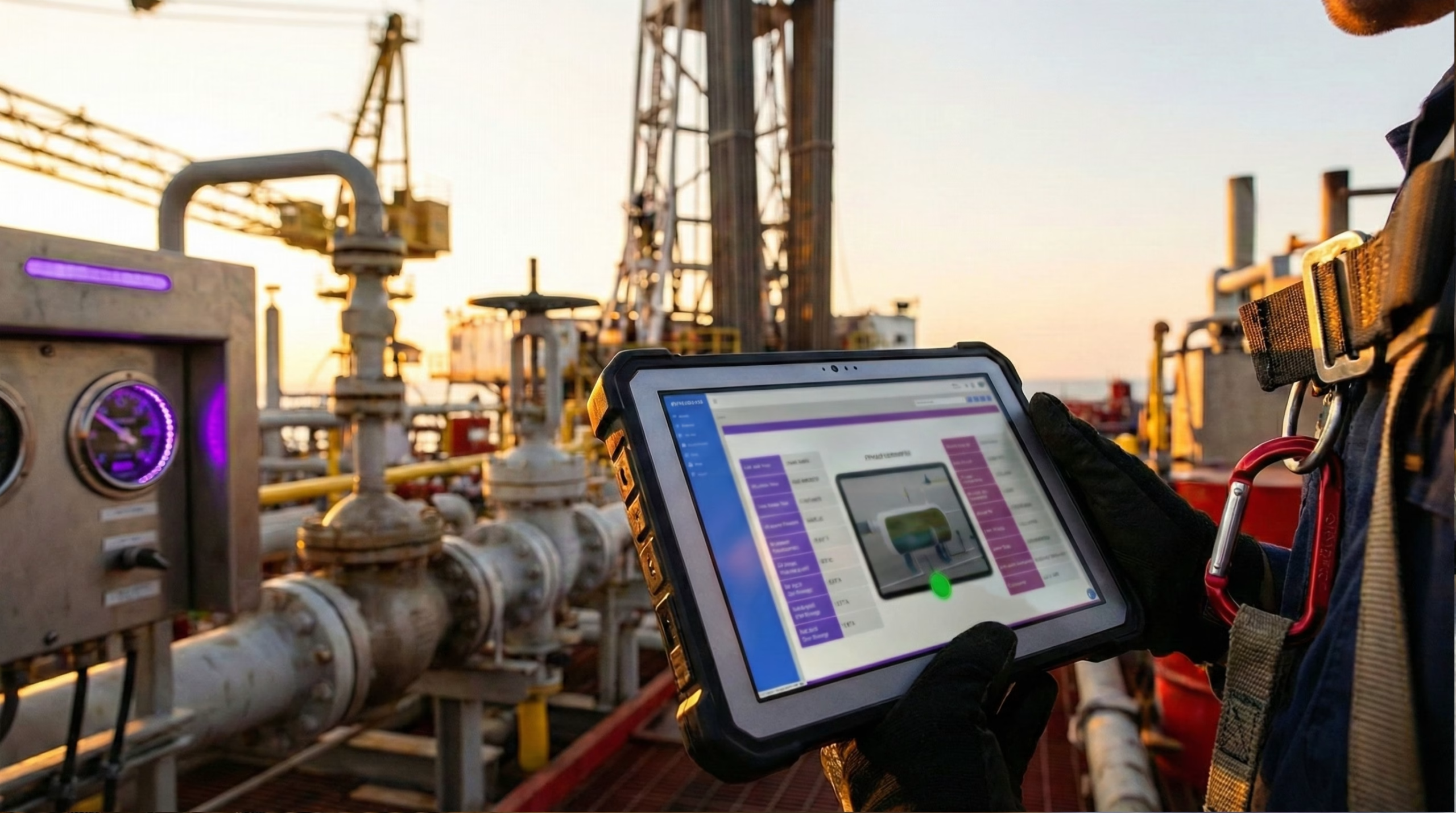
Improving the oilfield experience. Why should your company implement an IoT solution? IoT solutions for oil well management create a connected oilfield, enabling real-time monitoring and data collection.

Oil & Gas Operations with
40%

Reduction in unplanned downtime

50%

Improvement in safety compliance

30%

Reduction in truck roll operations

25%

Increase in production efficiency

35%

Reduction in maintenance costs

20%

Reduction in carbon footprint

Not optional

What the law and the lenders already ask of this kind of installation.

  • Required by lawRegulation (EU) 2024/1787 on methane emissions in the energy sectorIn force since August 2024; LDAR programmes and first surveys for existing sites were due in 2025, and verified site-level reports start in 2027.
  • Required by lawATEX: Directive 1999/92/EC and Spain Royal Decree 681/2003In force in Spain since 2003.
  • Required by lawSpain ITC MI-IP04, fuel supply installations for vehicles (Royal Decree 706/2017)After any alarm the investigation must end within 72 working hours. Single-wall stations selling over 3 million litres a year to third parties must move to double wall within 3 to 9 years of 2017, depending on their age; the alternative for the rest ends on 1 January 2040.
  • Required by lenders and insurersOGMP 2.0 (UNEP Oil & Gas Methane Partnership)
What each rule requires
01
Equipment uptime
99.5%

Equipment uptime

02
Reduction in safety incidents
60%

Reduction in safety incidents

03
Improvement in operational ROI
35%

Improvement in operational ROI

Gulf of Mexico, Mexico
🇲🇽 Gulf of Mexico, Mexico

Success Story

With R8 Technologies

20%

Fuel Optimization

50+

Vessels Tracked

100%

Automated Reports

Real-Time Data for Maximum Performance
01

Real-Time Data for Maximum Performance

With IoT, oil and gas companies can gain control over their supply chains by collecting critical information from connected equipment in the field to improve productivity, efficiency, and safety. Distributors get accurate, up-to-date product-level information, operations teams use sensor data for predictive maintenance, and companies can monitor pipelines to prevent catastrophes.

End-to-End Asset Management
02

End-to-End Asset Management

Equipment failures can have dramatic consequences. Reduce risk, optimize maintenance schedules, and quickly eliminate equipment malfunctions to reduce costs and safety risks with condition-based asset management. Get a complete picture of the health and performance of your monitoring equipment to improve uptime.

Limit Environmental Impact
03

Limit Environmental Impact

Aging pipelines can create significant risks that reduce reliability and lead to failures. Pipeline owners are turning to smart, connected systems and the power of data to proactively monitor changes in asset health, reduce failure rates and costs, and reinforce their commitment to environmental protection.

Complete Oil & Gas IoT Solutions

From wellhead to refinery, our platform provides end-to-end visibility and control for your operations.

Well Monitoring

Real-time monitoring of wells, compression stations, and pipeline stations.

Flow Measurement

Comprehensive oil and gas flow measurement across your infrastructure.

Critical Alerts

Delivery of critical messages via email, SMS, and voice to field personnel.

Universal Connectivity

Connect to any automation system, RTU, PLC, database, or BI system.

Detailed Reporting

Leverage real-time data for safety, environmental, and regulatory compliance.

Condition Monitoring

Real-time insights on equipment status and operating conditions.

Failure Prevention

Identify the causes of past failures from historical data.

Regulations and certifications

What is required by law, what lenders and insurers ask for, and what is optional, with how continuous monitoring helps document it. The platform supports compliance; it does not certify it.

Required by law

Rules in force for the buildings and operators in their scope. Not meeting them can bring inspections, fines or loss of a licence.

  • Required by lawEuropean UnionLaw

    Regulation (EU) 2024/1787 on methane emissions in the energy sector

    Articles 12, 14, 15, 16 and 17

    What it requires: Oil and gas production, gas processing, transmission, distribution, storage and LNG operators need a leak detection and repair (LDAR) programme: surveys at legal thresholds, a first repair attempt within 5 days and completion within 30, every leak recorded and the record kept at least 10 years, and an annual report. Routine venting and flaring are banned, events lasting 8 hours or more in 24 must be notified within 48 hours, and flares are inspected every 15 days unless the authority approves remote monitoring. Fuel depots and service stations are outside its scope.

    Applies: In force since August 2024; LDAR programmes and first surveys for existing sites were due in 2025, and verified site-level reports start in 2027.

    If it is not met: Penalties set by each Member State, including fines that at least take away the economic benefit of the breach and rise for repeated serious breaches, plus periodic penalty payments (article 33).

    How monitoring helps: Fixed methane detectors and flare pilot temperatures record when an event starts and how long it lasts, which drives the 8-hour count and the 48-hour notification, and the platform keeps the leak and repair log for 10 years. Fixed sensors do not replace the LDAR surveys, and remote flare monitoring needs the authority's approval.

    Official source
  • Required by lawEuropean UnionLaw

    ATEX: Directive 1999/92/EC and Spain Royal Decree 681/2003

    Articles 7 and 8 and Annex II; equipment under Directive 2014/34/EU (Royal Decree 144/2016)

    What it requires: The employer classifies hazardous areas into zones and keeps an explosion protection document. Equipment must match the zone: category 1 in zone 0, category 1 or 2 in zone 1, category 1, 2 or 3 in zone 2, with CE marking and an EU declaration of conformity from its manufacturer.

    Applies: In force in Spain since 2003.

    How monitoring helps: Wireless sensors avoid running new cable through hazardous areas. Inside a classified zone only models certified by their manufacturer for that category can be used, and the gateway goes outside the zone; their use has to be covered by the explosion protection document.

    Official source
  • Required by lawEuropean UnionLaw

    Seveso III: Directive 2012/18/EU and Spain Royal Decree 840/2015

    Royal Decree 840/2015, articles 7, 8, 10, 21 and 25; Annex III of the Directive

    What it requires: Sites storing at least 2,500 t of petroleum products or 50 t of liquefied flammable gas, LPG included, need a major-accident prevention policy and a safety management system that covers alarm management and monitoring of performance. Upper-tier sites (25,000 t and 200 t) also need a safety report reviewed at least every five years and an internal emergency plan.

    Applies: On-site inspections at least yearly for upper-tier sites and every three years for lower-tier ones, unless a risk-based programme sets otherwise.

    If it is not met: Sanctions under the civil protection rules, the Industry Act (Ley 21/1992) and the Environmental Liability Act (Ley 26/2007), as article 25 sets out.

    How monitoring helps: The alarm and acknowledgement log and the trend history are evidence for the monitoring part of the safety management system and for inspections. Monitoring is not a safety barrier: the safety instrumented system and the emergency shutdown stay separate.

    Official source
  • Required by lawSpainLaw

    Spain ITC MI-IP04, fuel supply installations for vehicles (Royal Decree 706/2017)

    Chapter VIII (8.1 to 8.6), chapter XV and second transitional provision

    What it requires: Leak detection under UNE-EN 13160 on buried tanks, pressurised pipes with automatic hourly, monthly and six-monthly tests that stop the pump on a leak, and liquid detectors in the sumps. Every tightness test, confirmed leak and detection fault goes into the logbook, and leak-detection and inventory data are kept ten years.

    Applies: After any alarm the investigation must end within 72 working hours. Single-wall stations selling over 3 million litres a year to third parties must move to double wall within 3 to 9 years of 2017, depending on their age; the alternative for the rest ends on 1 January 2040.

    If it is not met: If a leak is confirmed, or the 72-hour investigation is not done, the pipe goes out of service or the tank is emptied, and the industry and environment authorities are notified.

    How monitoring helps: The gateway reads alarms and test results from the certified leak-detection panel and the tank gauge over Modbus, timestamps each alarm so the 72-hour clock is visible and keeps a ten-year archive. Our sensors are not a UNE-EN 13160 leak-detection system and do not replace one.

    Official source
  • Required by lawUnited StatesLaw

    40 CFR Part 280, Subpart D: release detection for underground storage tanks

    §280.41, §280.43 and §280.45

    What it requires: Tanks monitored for releases at least every 30 days, interstitial monitoring for tanks installed after April 2016, automatic line leak detectors on pressurised piping and a yearly operation test of the detection equipment. Monitoring results are kept at least one year and the yearly tests three.

    Applies: In force; yearly operation tests since October 2018.

    How monitoring helps: Brings the automatic tank gauge and interstitial sensor outputs into one history, alerts when a 30-day test is missing and keeps the records beyond the minimum. The certified tank gauge or line leak detector remains the compliance device.

    Official source
  • Required by lawUnited StatesLaw

    49 CFR 195.134 and 195.444: leak detection on hazardous liquid pipelines

    §195.134, §195.444; gas transmission leakage surveys in §192.706

    What it requires: Every hazardous liquid pipeline needs an effective leak detection system that the operator evaluates by length, product, speed of detection and response, and computational monitoring follows API RP 1130. Gas transmission lines are surveyed for leaks at least once a year.

    Applies: Pipelines built before October 2019 had until 1 October 2024.

    How monitoring helps: Wireless pressure and temperature at block valves, pump stations and remote sections add data to the operator's evaluation. It is not an API RP 1130 computational system and it does not shut anything down.

    Official source
  • Required by lawUnited StatesLaw

    40 CFR Part 60, Subpart OOOOb: methane standards for new oil and gas sources

    §60.5397b (fugitive emissions) and §60.5398b (continuous monitoring)

    What it requires: Onshore sites built or modified after 6 December 2022 survey fugitive emissions on a schedule set by site type, or use an EPA-approved continuous monitoring technology that reports a methane rate for every 12-hour block.

    Applies: Several provisions start on 22 January 2027 in the current text.

    How monitoring helps: Our gas sensors are not an EPA-approved continuous monitoring technology. The platform stores the data and flare telemetry and tracks survey schedules and repair deadlines.

    Official source

Required by lenders, insurers and investors

Not a legal duty for the owner, but it decides financing terms, insurance or the value of the asset.

  • Required by lenders and insurersInternationalGuideline

    OGMP 2.0 (UNEP Oil & Gas Methane Partnership)

    Referenced in article 12 of Regulation (EU) 2024/1787

    What it requires: Methane reporting by source and, at its top level, with site-level measurements. Joining is voluntary, but EU operators must use its templates until the Commission adopts its own, and EU importers can show equivalence with the top level.

    How monitoring helps: Continuous site data and timestamped event logs support reporting based on measurement; verification is done by an accredited verifier.

    Official source

Technical references

Standards and guides that become binding where a regulation or the authority adopts them, and the yardstick an inspector or auditor uses.

  • Technical referenceUnited StatesStandard

    API Standard 2350 (overfill prevention)

    Incorporated by reference in 49 CFR 195.428(c)

    What it requires: Overfill protection for aboveground tanks; for US breakout tanks of 600 gallons or more built or altered after October 2000 it is mandatory, with the protection tested at least once a year.

    How monitoring helps: Level history and high-level alarm records support the tank documentation. Our alarms are not the independent overfill protection system.

    Official source

Oil and gas monitoring: methane, leaks, tanks and the records each rule asks for

In oil and gas the question is no longer whether to monitor but what each rule asks to be recorded, for how long, and what a sensor can and cannot replace. The EU methane regulation, ATEX, Seveso, the Spanish rules for service stations and the US tank and pipeline rules all ask for dated records, alarms and deadlines. This guide explains them by type of site, which data answers each one, where wireless sensors fit, and where the certified safety and leak-detection systems must stay.

Which rules apply to which site

Regulation (EU) 2024/1787 covers production, gas processing, transmission, distribution, underground storage and LNG. It asks for a leak detection and repair programme with repairs started within 5 days and finished within 30, every leak recorded and kept for 10 years, a ban on routine venting and flaring, notification within 48 hours of events lasting 8 hours or more in 24, and flare inspections every 15 days unless the authority approves remote monitoring. Fuel depots and service stations are outside it.

Those are covered by other rules. In Spain, ITC MI-IP04 asks service stations for UNE-EN 13160 leak detection, an investigation within 72 working hours of any alarm and ten years of detection and inventory data. Seveso III applies from 2,500 t of petroleum products or 50 t of LPG and asks for a safety management system that covers alarm management and monitoring of performance. ATEX sets which equipment can go in each hazardous zone.

SiteMain rulesRecords and deadlines
Wells, compressor stations, gas networksRegulation (EU) 2024/1787; 40 CFR 60 OOOOb in the USLeak log 10 years; repair in 5 and 30 days; notify events in 48 h
Service stationsITC MI-IP04; 40 CFR 280 in the USDetection data 10 years; investigation in 72 h; monitoring every 30 days in the US
Depots and tank farmsSeveso III; ATEX; API 2350 in US breakout tanksAlarm management in the safety system; inspections every 1 or 3 years
Pipelines49 CFR 195 and 192 in the USLeak detection evaluated by the operator; gas surveys at least yearly

Why it matters now

According to the IEA's Global Methane Tracker 2025, methane from fossil fuels is above 120 million tonnes a year and around 70% of it could be avoided with existing technology; super-emitting events at oil and gas sites reached a record in 2024. In the EU, the recitals of the methane regulation put oil and fossil gas at 33% of the Union's energy-sector methane emissions in 2019.

Leaks from buried tanks are not rare either. The US EPA counted 1,997 confirmed releases from underground storage tanks between October 2025 and March 2026, and a technical compliance rate of 60.9% over the previous year.

Where wireless sensors fit and where they do not

  • Pressure on remote points: Wellheads, block valves and pump stations with no cabling, with a sensor such as the Decentlab DL-PR26. It adds data to the operator's leak evaluation; it is not a computational leak detection system.
  • Tank level: An ultrasonic level sensor such as the Milesight EM400-UDL gives level history and high-level alarms for inventory. It is not the independent overfill protection.
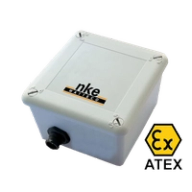
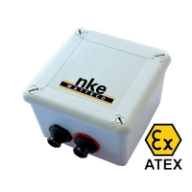
  • Devices inside hazardous areas: Inside a classified zone, only sensors sold in an ATEX version, such as the Watteco Pulse Senso ATEX for meter pulses; check the certificate of each model against the zone in your explosion protection document before installing it.
  • Signals that already exist: Leak-detection panels, tank gauges and PLCs are read through the edge gateway over Modbus or OPC UA. The gateway timestamps each alarm, which makes the 72-hour or 48-hour clock visible, and keeps the archive for ten years.

What does not change: the safety instrumented system and the emergency shutdown stay independent, the certified leak-detection system remains the compliance device, fixed methane sensors do not replace LDAR surveys, and any device inside a classified zone must be an ATEX model of the right category.

How to plan a pilot

  • 1. Start where a deadline runs: The site with the next inspection, the station still on single wall, or the asset with the most leaks last year.
  • 2. Read the certified systems first: Leak-detection panel, tank gauge and PLC alarms through the gateway; wireless sensors only where there is no signal.
  • 3. Turn each deadline into an alert: 72 hours after a leak alarm, 5 and 30 days for a methane repair, 48 hours for a long flaring event, a missing 30-day test.
  • 4. Extend by type of site: Same rules and dashboards for every station or depot, so the one that drifts stands out.

What to ask a provider

  • Does it read my certified systems?: The leak-detection panel and the tank gauge are the compliance devices; the platform has to read them, not replace them.
  • Does it keep ten years of history?: Both the methane regulation and MI-IP04 ask for ten years.
  • Which of its devices are ATEX?: Ask for the certificate of each model and category; anything without one goes outside the zone.
  • Does it say it is a safety system?: A monitoring platform is not one. It records, alerts and reports; shutdown belongs to the safety system.

Cloud Studio IoT runs in AWS (Frankfurt for Europe) or on your own servers, and under your brand if you are an integrator. Tell us about your sites.

Sources

  1. Regulation (EU) 2024/1787 on methane emissions
  2. Royal Decree 706/2017, ITC MI-IP04 (BOE)
  3. Royal Decree 840/2015, Seveso III (BOE)
  4. Royal Decree 681/2003, ATEX workplaces (BOE)
  5. 40 CFR Part 280, Subpart D (eCFR)
  6. US EPA, UST performance measures
  7. IEA, Global Methane Tracker 2025

Oil & Gas IoT: Frequently Asked Questions

Everything you need to know about implementing IoT in oil and gas operations

Get Started

Transform your oil & gas operations today

Create your own IoT solution on a world-class platform. Fast, easy, and scalable.