Innovative IoT: Empowering the Smart Building Revolution

Smart buildings and the use of renewable energy are two of the most exciting developments in the world of architecture and engineering today. With the power of the Internet of Things (IoT), we can now create buildings that are not only energy-efficient, but also actively generate and store their own energy, using sources like solar, wind, and geothermal power.
What is a Smart Building?
But what exactly makes a building “smart”? At its most basic level, a smart building is one that can monitor and control its own energy usage. This might involve using sensors to detect when rooms are occupied and adjusting the heating and cooling accordingly, or installing automatic shading systems that respond to changes in sunlight throughout the day.
But the possibilities don’t stop there. By connecting a building to the internet and using advanced analytics, it’s also possible to optimize energy usage even further, making use of real-time data to make decisions about things like when to schedule maintenance or when to generate energy using on-site renewable sources.
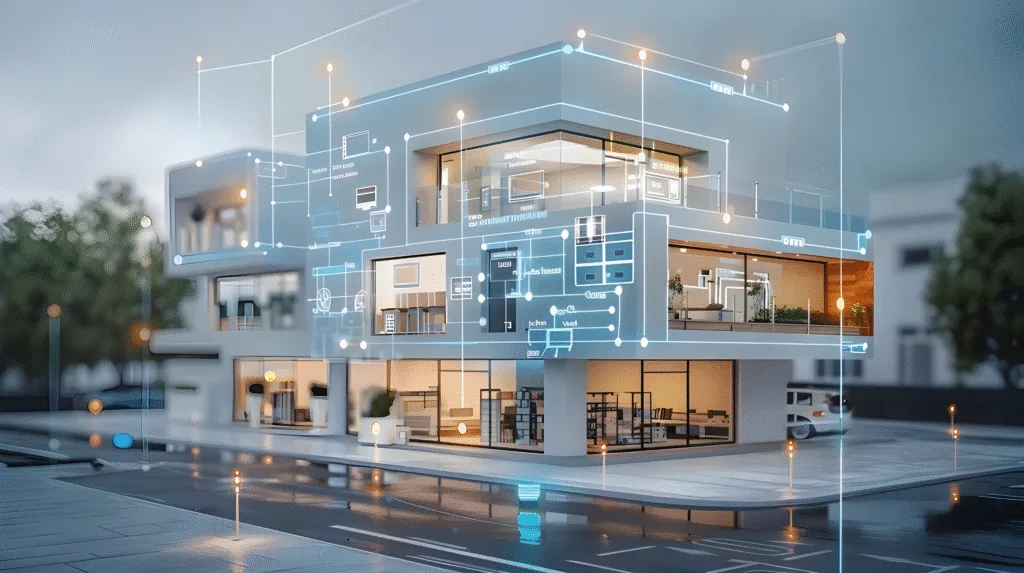
The Role of IoT
This is where IoT comes in. By connecting various systems within a building to the internet, building managers and engineers can gain a much deeper understanding of how the building is being used and where energy is being wasted. From there, they can make adjustments to improve efficiency and reduce costs.
One of the most powerful aspects of this kind of smart building technology is the ability to combine renewable energy generation with energy storage. This means that a building can not only generate its own clean energy using sources like solar panels or wind turbines, but also store that energy in batteries for use when it’s needed most.
This kind of “microgrid” system can be used to power a single building, or even an entire community. It can also be connected to the larger grid, allowing for the exchange of energy with the outside world and providing a source of backup power in case of emergencies.

The Future of Smart Buildings
The future of smart buildings and renewable energy is truly exciting, and the possibilities are endless. With the help of IoT, we can create buildings that not only reduce their environmental impact but also provide a valuable source of clean energy for our communities. The future of smart building is about energy efficiency, sustainability, and self-reliance, and with IoT as the backbone, we are well on our way to creating a brighter, greener future for all of us.
So let’s work together to build a smarter, more sustainable world, one building at a time.
Join the revolution in smart buildings. Request a demo now and see how IoT can enhance the comfort, efficiency and sustainability of your building.

Cloud Studio and N3uron Partner to simplify the monitoring of your Industrial assets
17. Jan.
The Future of SCADA with IoT: A Metaphor for a Brilliant Setting
28. Feb.
Verwandte Artikel

World Internet Day 2026: From ARPANET to the Future of the Internet of Things
It was 10:30 PM on October 29, 1969, at Leonard Kleinrock's laboratory at UCLA. Graduate student Charley Kline began typing "login" from a computer connected for the first time to another machine more than 500 kilometers away, at the Stanford Research Institute. After the letter "l" and the "o", the system crashed. The first message [...]

From Iceland to Buenos Aires: How Smart Lighting and IoT Are Reshaping Cities Worldwide
Smart street lighting is an advanced system that uses sensors, connectivity, and intelligent controls to adapt lighting based on real-time conditions like traffic flow, weather, or human presence. These systems integrate LED technology for energy efficiency, durability, and longevity, while also incorporating motion detectors, ambient light sensors, and environmental sensors. Unlike traditional streetlights, smart systems can dynamically adjust brightness, dim [...]

OpenClaw: The Self-Hosted AI Gateway for Complete Data Control
Every message you send to ChatGPT, every conversation with an AI assistant, passes through servers you do not control. For businesses handling sensitive data, developers building proprietary systems, or privacy-conscious users, this dependency on third-party infrastructure creates unacceptable risk. The OpenClaw self-hosted AI gateway emerges as a compelling alternative, bringing the power of large language [...]
Bereit, Ihr Unternehmen zu transformieren?
Kontaktieren Sie uns und erfahren Sie, wie Cloud Studio IoT Ihnen helfen kann, Ihre Ziele zu erreichen.